A surgeon at the University of New Mexico School of Medicine has become the first hand surgeon in New Mexico and among only a handful of specialists in the United States to offer a new thumb joint replacement procedure designed to improve mobility and quality of life for patients suffering from thumb arthritis.
Nathan T. Morrell, Associate Professor of Orthopaedics and specialist in hand and upper extremity surgery at the University of New Mexico School of Medicine, recently introduced the procedure, which uses an implant to replace the arthritic joint at the base of the thumb.
According to Morrell, the technology represents a significant advancement in the treatment of thumb arthritis, a condition commonly seen among aging adults and one that can substantially affect hand function and daily activities.
The procedure is comparable to hip and knee replacement surgeries, where a prosthetic implant is used to replace damaged joint surfaces. In the case of thumb arthritis, the implant creates a new articulating surface consisting of a ball-and-socket mechanism that restores movement while eliminating painful bone-on-bone contact caused by cartilage loss.
Morrell believes the technology could transform the treatment landscape for thumb arthritis by overcoming some of the limitations associated with conventional surgical approaches. The implant is designed to restore stability, motion and strength, enabling patients to return to normal activities with improved hand function.
To prepare for the procedure, Morrell underwent specialised training in Europe with experts in the field. He estimates that only 30 to 40 hand surgeons across the United States currently offer the treatment, making UNM one of the early adopters of the technology.
Thumb arthritis most commonly develops at the base of the thumb, a joint that experiences significant stress through everyday use. Candidates for the procedure typically include patients with advanced arthritis who have not achieved adequate relief through conservative treatments such as medications, splinting or corticosteroid injections.
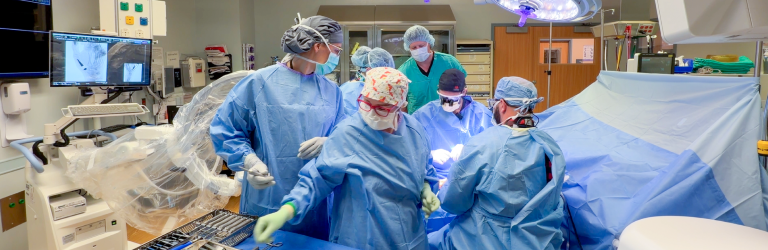
The surgery generally takes about 45 minutes and is performed using regional anesthesia combined with sedation. Most patients remain awake during the procedure and are able to return home the same day.
With the introduction of the new implant-based approach, UNM aims to expand treatment options for patients seeking long-term relief from thumb arthritis while improving outcomes and preserving hand function.