BioArctic AB's (publ) partner Eisai announced that the US Food and Drug Administration (FDA) has approved a supplemental Biologics License Application (sBLA) for a once-weekly lecanemab irmb subcutaneous injection (US brand name: Leqembi Iqlik) as a starting dose for the treatment of early Alzheimer's disease. The US launch is planned for late August 2026.
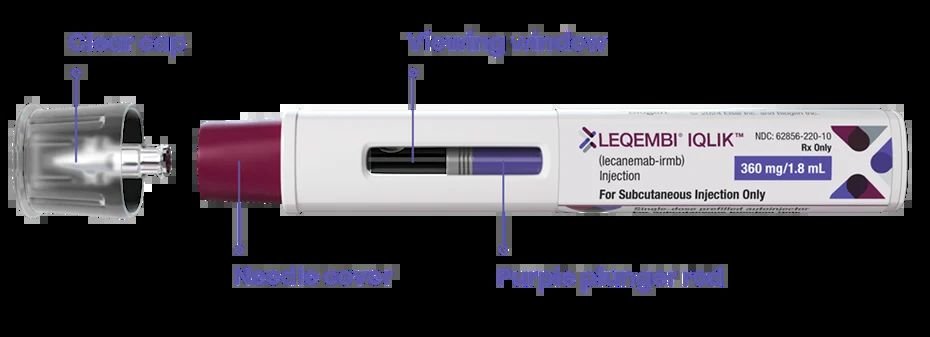
Leqembi Iqlik is a first-of-its-kind anti-amyloid treatment worldwide, offering at-home dosing for initiation and maintenance. It is administered via an autoinjector, offering a convenient alternative to intravenous (IV) infusion from the start of treatment. For initiation, the approved regimen is 500 mg once weekly, delivered as two 250 mg injections, each administered in approximately 15 seconds.
Leqembi Iqlik is already approved for maintenance dosing in the US at 360 mg once weekly, once 18 months of IV or subcutaneous treatment has been completed. Patients can now receive Leqembi either as an IV infusion or as a subcutaneous injection (SC) with Leqembi Iqlik throughout the entire treatment course - from initiation through maintenance and may switch between administration methods as needed, providing greater flexibility and convenience.
Leqembi is indicated in the US for the treatment of adults with mild cognitive impairment (MCI) or mild dementia due to Alzheimer's disease, collectively referred to as early Alzheimer's disease. MCI due to Alzheimer's disease represents the earliest symptomatic stage of the disease and may be associated with subtle changes in memory, thinking, language, or daily functioning.
Clinical data supporting FDA approval of subcutaneous initiation dosing
The FDA approval of Leqembi Iqlik for treatment initiation is supported by a comprehensive clinical data package evaluating SC administration of lecanemab across multiple studies and dosing regimens. Data from sub-studies within the Phase 3 Clarity AD long-term extension (LTE), conducted following the 18-month core study in individuals with early Alzheimer's disease, showed:
Once-weekly subcutaneous administration achieved exposure equivalent to intravenous dosing, supporting similar clinical (efficacy) and biomarker (amyloid removal) benefits.
The rate of exposure-related adverse events such as ARIA-E with SC administration is expected to be comparable with IV administration. There was no increase in isolated ARIA-H (i.e., ARIA-H in patients who did not also experience ARIA-E) for Leqembi compared to placebo.
The overall safety profile of SC administration was generally similar to intravenous administration. Injection-related reactions were observed with subcutaneous Leqembi, most of which were localized, while systemic reactions were less frequently observed.
"This approval represents another important step forward in the treatment of Alzheimer's disease," said Gunilla Osswald, CEO of BioArctic. "By providing a new administration option from the start of treatment, patients, caregivers and healthcare professionals gain greater flexibility in how therapy is delivered. As the Alzheimer's treatment landscape continues to advance, innovations that simplify access and support individualized care will be increasingly important. We are encouraged to see Eisai's diligent work to meet the diverse needs of people living with this difficult disease."