Advances in genomic profiling and liquid biopsy are expanding the role of molecular diagnostics across the cancer-care pathway. Blood-based testing can support treatment selection when tumour tissue is unavailable, monitor emerging resistance and potentially enable earlier detection through multi-cancer screening applications.
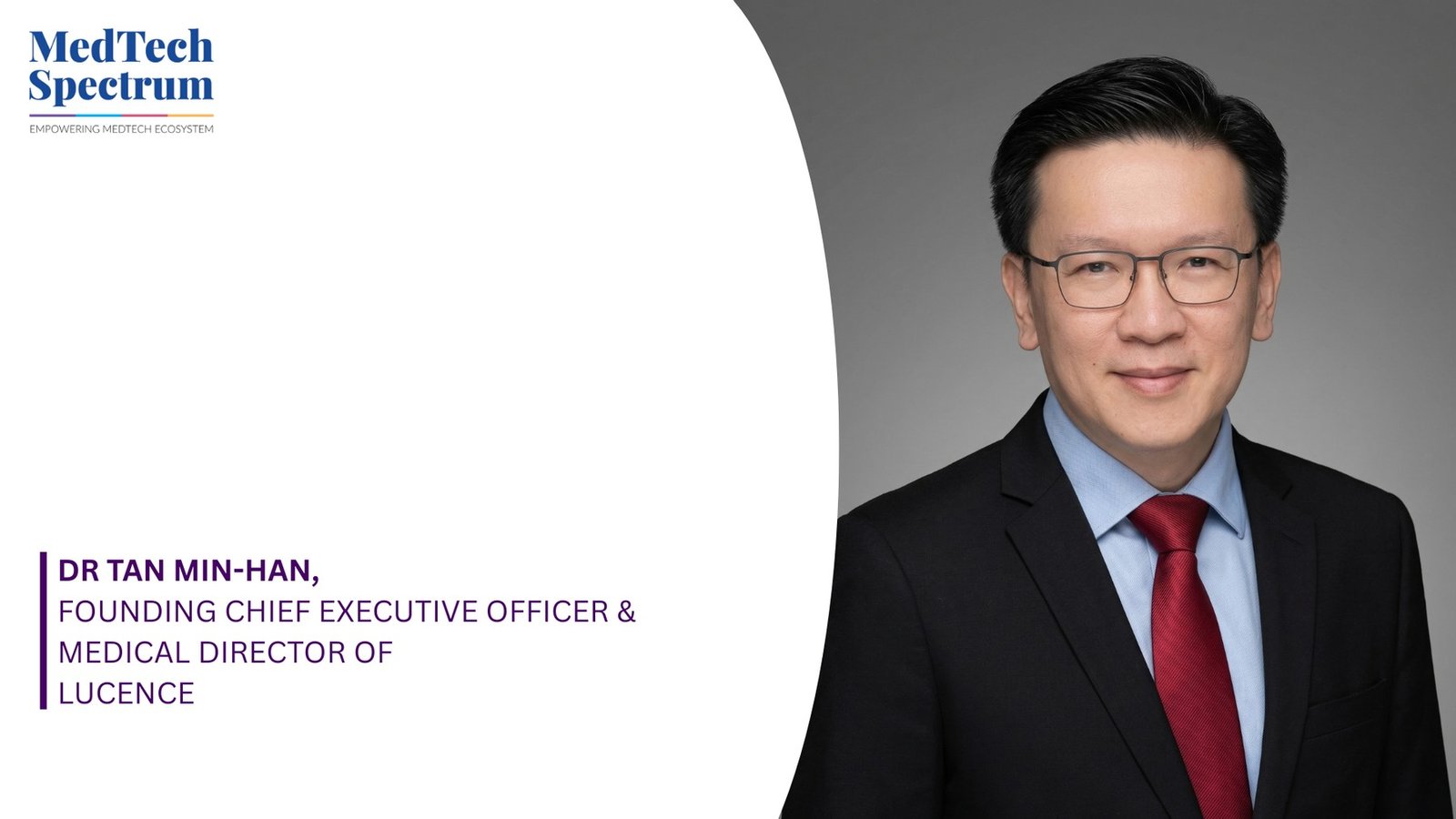
Despite this progress, access to advanced diagnostics remains uneven across Asia, with differences in reimbursement, laboratory infrastructure and the availability of evidence generated from local populations. Dr Tan Min-Han, Founding Chief Executive Officer and Medical Director of Lucence, discusses the clinical value of liquid biopsy, the role of artificial intelligence in cancer diagnostics and the evidence needed to make precision oncology more accessible across the region.
What are the biggest gaps between advances in precision oncology and everyday clinical adoption in Asia?
The science is moving faster than clinical adoption. While genomic technologies have advanced considerably, access to testing, reimbursement and laboratory infrastructure remain uneven across Asia. Another challenge is that much of the published evidence has been generated outside Asian populations. Expanding local clinical evidence and integrating molecular testing into routine care pathways will be key to closing that gap.
Where does liquid biopsy offer the strongest clinical value today?
Liquid biopsy has established clinical value in advanced cancer, particularly when tumour tissue is unavailable, insufficient or difficult to obtain. It enables comprehensive genomic profiling, supports treatment selection and helps monitor emerging resistance over time. We are also seeing growing evidence for specialised applications, such as cerebrospinal fluid testing for central nervous system malignancies, multi-cancer early detection, and, increasingly, multi-disease screening using blood-based biomarkers.
How is AI changing the development and use of cancer diagnostics?
AI is helping researchers interpret increasingly complex genomic and molecular data more efficiently, accelerating biomarker discovery and assay development. However, AI does not replace clinical evidence. Its value depends on high-quality datasets, rigorous validation and thoughtful integration into clinical workflows. The future lies in combining AI with robust clinical science rather than viewing it as a standalone solution.
What evidence do clinicians, payers and healthcare systems need before liquid biopsy and genomic testing can be adopted more widely?
The focus is increasingly shifting from whether a test works to whether it improves patient care. Clinicians want evidence that testing changes treatment decisions. Payers want to see improved outcomes or lower overall healthcare costs. Healthcare systems need confidence that testing can be delivered consistently and efficiently at scale. Generating real-world evidence across diverse healthcare settings will be increasingly important.
How can advanced diagnostics become more affordable and scalable across Asian healthcare systems?
Scale is a major driver of affordability. As testing volumes increase and laboratory processes become more efficient, costs naturally come down. At the same time, stronger local evidence can support reimbursement decisions and broader adoption. Singapore has demonstrated how close collaboration between research institutions, healthcare providers and industry can accelerate innovation, and similar collaborative models could help expand access across the region as genomic testing evolves beyond precision oncology towards multi-cancer and multi-disease screening.
Why is local population data important for improving precision medicine tools for Asian patients?
Precision medicine depends on the quality and relevance of the underlying data. Many genomic datasets still underrepresent Asian populations, which can affect biomarker interpretation and clinical performance. Building population-specific datasets helps improve the accuracy of diagnostic tools while ensuring they are relevant to the patients they are intended to serve. This is one reason Singapore has invested significantly in national precision medicine initiatives and longitudinal health studies.
Over the next few years, what developments do you expect will have the greatest impact on precision oncology in Asia?
The biggest shift will be moving precision oncology upstream. We will see broader use of comprehensive genomic profiling, increasing adoption of liquid biopsy across the patient journey, greater use of blood-based tests for multi-cancer and, eventually, multi-disease screening, and greater integration of molecular data into routine clinical decision-making. Combined with AI-enabled analytics and larger Asian genomic datasets, these developments have the potential to make precision medicine more accessible, more personalised and more scalable across the region.