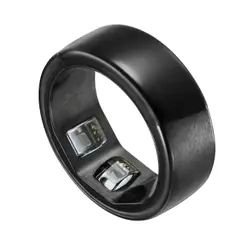
Sky Labs (CEO Jack ByungHwan Lee) announced that its ring-type cuffless blood pressure monitor, 'CART BP pro,' has been officially integrated into the '2026 Korean Society of Hypertension Guidelines for the Management of Hypertension (6th Edition).'
This marks the first time in the world that a ring-type blood pressure monitor, which measures blood pressure simply by being worn on a finger without a cuff that compresses the arm, has been included in official hypertension treatment guidelines. With this, Korea has become the first country among global healthcare systems to incorporate cuffless blood pressure measurement technology into mainstream clinical practice.
Through this revised guideline, the Korean Society of Hypertension explicitly stated the "first inclusion of cuffless blood pressure measuring devices in clinical practice" and presented them as devices that may be considered for out-of-office blood pressure monitoring. In the guideline, the recommendation class for cuffless blood pressure monitors was designated as 'Class IIb.'
This inclusion in the treatment guidelines is also an innovative change, drawing attention from the global hypertension academic community. Until now, major academic societies in the United States and Europe have maintained a cautious stance on the introduction of cuffless devices due to reasons such as the lack of standardised validation protocols and differences in accuracy among devices. Even amid such concerns, Sky Labs' ring-type blood pressure monitor not only showed a favourable correlation with office blood pressure measured by the traditional auscultatory method, but also demonstrated a high level of accuracy comparable to standard 24-hour ambulatory blood pressure monitoring (ABPM) values. Based on such strong clinical evidence, the Korean Society of Hypertension decided to make the world's first official recommendation.
The Korean Society of Hypertension (KSH) formalised the clinical protocols for 'out-of-office blood pressure measurement' for patients with prehypertension and high-risk groups requiring intensive blood pressure control. First, it set the target blood pressure for patients with diabetes, chronic kidney disease, cerebral infarction (accompanied by stroke), and high-risk hypertension at a more stringent 'below 130/80 mmHg' than before and presented risk-based drug treatment guidelines. In addition, for the 'prehypertension' patient group, which is highly likely to progress to hypertension, it also specified the recommendation to actively consider ambulatory blood pressure monitoring (ABPM) or home blood pressure measurement to determine whether masked hypertension is present.