The Every Woman study- Low and low-middle-income country edition, published in the prestigious journal The Lancet on 11th December 2025, where India participated through Kolkata Gynaecological Oncology Trials and Translational Research Group (KOLGOTRG), highlighted how access to costly chemotherapy agents and poor access to clinical trials are considered global issues.
At the 8th annual meeting organised by KOLGOTRG, a landmark study, IPIROC (Intermittent PARP inhibitor Regimen in Ovarian Cancer) was officially launched. This trial was developed after years of pioneering research by Dr Asima Mukhopadhyay, Consultant Gynaecologist and Clinician Scientist, along with her team. Funded by ICMR (Indian Council of Medical Research) and facilitated by Suraksha Diagnostics Limited (“Suraksha Clinic and Diagnostics”), this trial will be open across all states in India and some sites abroad. It will address a critical issue on how to provide the right dose of PARP inhibitor with lower side effects and lower cost to the right patients.
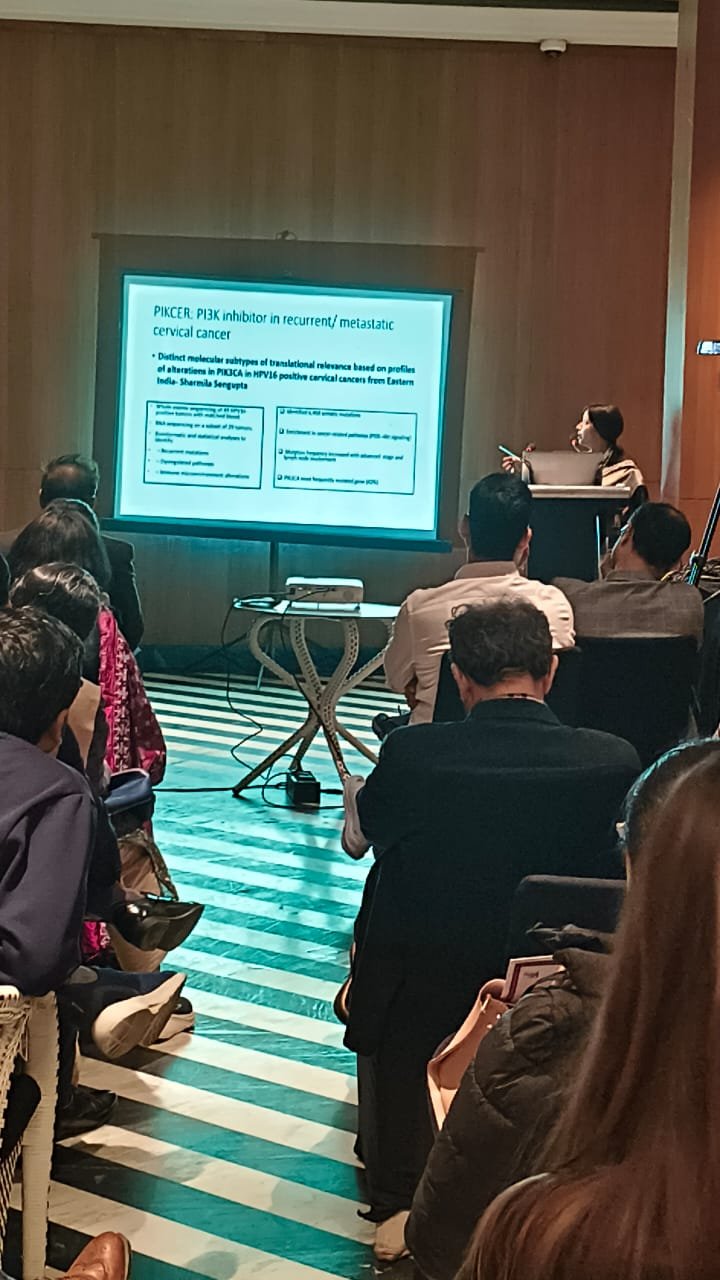
The event was graced by the presence of several world leaders in the field of women's cancer, such as Dr Michael Bookman, Chair of GCIG (Gyn Cancer Intergroup, USA), Medical Oncologist; Dr Amit Oza, Past Chair of GCIC, Canada. Medical Oncologist; Kailash Narayan, Prof Radiation Oncology, Melbourne, Australia; Dr Asima Mukhopadhyay, Director KolGOTRG India; Dr Neerja Bhatla - Padmashree Gyn Oncologist. EX HOD AIIMS Delhi; Prof Val Gebski, Senior Statistician, Sydney, Australia; Professors and Faculty from SGPGI, KGMU Lucknow, TMH Mumbai, Aster CMI Bengaluru, AIIMS Delhi, NCI Jhajjar and other AIIMS, Institutions across India, along with representatives from BDR Pharma and Cepheid, Members of KoLGOTRG were also present.
KOLGOTRG has been pioneering the development of clinical trials and research in women's cancer as the only research group from India and South Asia to be a member of the Global Consortium Gynaecological Cancer Intergroup or GCIG.
PARP Inhibitors are targeted therapy treatments for cancer types involving changes or mutations in the BRCA gene. The role of PARP Inhibitors, a group of pharmacological inhibitors of the enzyme poly ADP ribose polymerase (PARP), is to prevent cancer cells from getting access to a certain protein that the cancer can use for repairing DNA damage, known as PARP. PARP Inhibitors prevent cancer cells from repairing their DNA, so that they get destroyed naturally, especially when tumours are deficient in the pathway known as homologous recombination, which can be tested through assays in ovarian and breast cancer patients, known as the HRD assay. Because of high cost and certain side effects, people often discontinue the medicine. After years of research, Dr Asima Mukhopadhyay and her team are working on testing whether the PARP Inhibitor Rucaparib, dosage of twice a week, reduces side effects while maintaining efficacy as the daily dosing, for ovarian cancer patients.