Microsure has received CE mark approval for MUSA-3, its robot-assisted microsurgery platform, marking a regulatory step that moves the Dutch medtech company from development-stage engineering into clinical deployment across Europe.
The approval is significant because super-microsurgery remains one of the most technically demanding areas of surgery. Procedures involving lymphatic ducts, small blood vessels, and peripheral nerves require a level of manual precision that can be difficult to sustain consistently, particularly when operating on extremely small anatomical structures. This has limited the number of surgeons able to perform such procedures and has created a clinical gap in access to advanced reconstructive and lymphatic surgery.
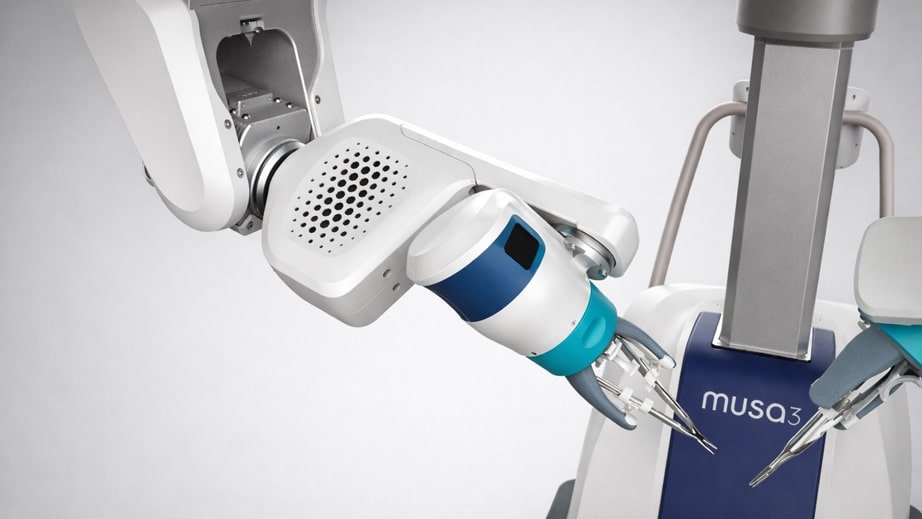
MUSA-3 is designed to support open super-microsurgical procedures by downscaling and stabilising hand movements. Rather than replacing the surgeon, the system functions as an assistive robotics platform intended to improve control during delicate procedures such as super-micro-anastomosis, free flap surgery, lymphatic surgery, and peripheral nerve surgery.
The CE mark enables clinical use of MUSA-3 in Europe, providing Microsure with a route to begin generating real-world clinical evidence in hospital settings. For a surgical robotics company, this is a pivotal transition. Regulatory clearance alone does not guarantee adoption; hospitals will also need to see evidence of procedural value, surgeon usability, workflow fit, training feasibility, and potential impact on patient outcomes. For Microsure, this creates a foundation for evidence generation at leading European centres and positions the company to demonstrate whether robotic assistance can expand the practical reach of super-microsurgery.