The Singapore Clinical Research Institute (SCRI) convened its Clinical Trials Symposium 2026, bringing together leading minds from Singapore and across the international clinical research community to chart the next chapter of clinical trials here and beyond. The Symposium, which also marks the 30th anniversary of SCRI, highlights Singapore's commitment to advancing clinical research through international collaboration, technological innovation, and greater public participation.
This year's Symposium carries special significance as SCRI celebrates its 30th anniversary— three decades of contributing to Singapore's clinical research capabilities and its growth into a trusted hub for medical research and innovation. The occasion was graced by the Guest of Honour, Professor Kenneth Mak, Director-General of Health, Ministry of Health.
In the opening plenary panel, three prominent regulatory leaders — Dr Robert Califf, the former Commissioner of the U.S. Food and Drug Administration (FDA); Ms Emer Cooke, the Executive Director of the European Medicines Agency (EMA); and Adjunct Professor (Dr) Raymond Chua, the Chief Executive Officer of Singapore's Health Sciences Authority (HSA) — came together to examine how new technologies and modalities are transforming the design and conduct of clinical trials in a fast-paced and ever-changing landscape.
Moderated by Professor John Lim, Professor & Executive Director, Centre of Regulatory Excellence (CoRE), Duke-NUS, the discussion explored the opportunities and challenges that emerging technologies present for regulators, researchers, and patients alike. Panellists also delved into the growing role of artificial intelligence in informing regulatory decisions, and what it would take to make Singapore a more attractive destination for clinical trials. Together, these conversations pointed to what a future-ready regulatory framework might look like in an era of rapidly evolving innovation.
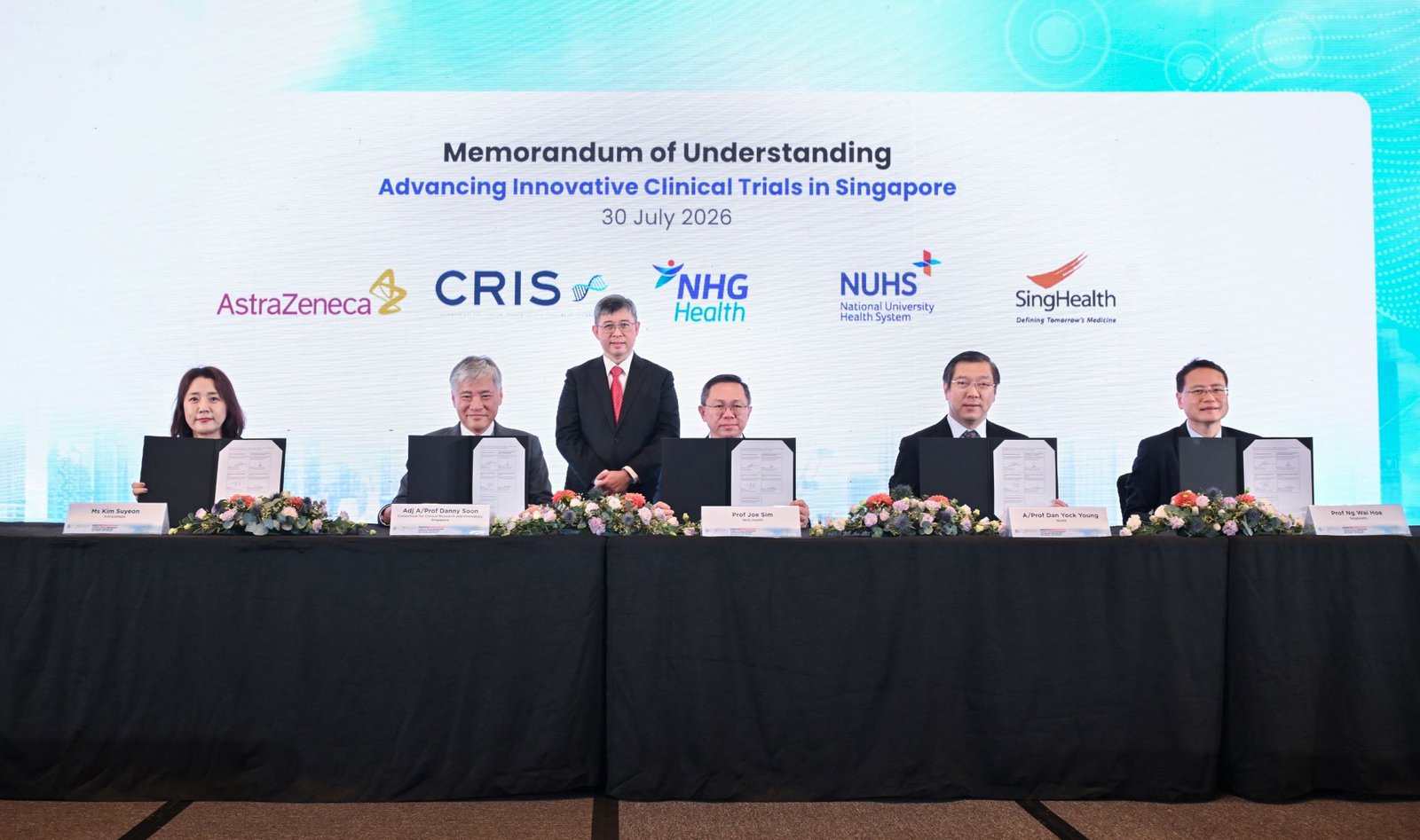
As part of the Symposium, SCRI and its parent company, the Consortium of Clinical Research and Innovation (CRIS), signed three Memoranda of Understanding (MOUs) with eight key public and private sector partners, strengthening Singapore's standing as a leading destination for clinical trials. The agreements span a range of priorities: including deepening patient and public involvement and engagement (PPIE) in research; enabling early access to trials of novel modalities in Singapore and forging strategic industry partnerships to attract cutting-edge clinical research, accelerate the development of innovative therapies, and strengthen Singapore's position as a globally connected clinical research and innovation hub. Further details on each MOU are available in ANNEX A.
At the heart of every clinical trial is the patient — and yet, many in Singapore have never participated in one, often due to limited awareness of how trials work or how to find out about available opportunities. Recognising that greater awareness and accessibility are key to participation, the Symposium brought together Singapore clinical experts and a patient ambassador to speak candidly about the myths surrounding clinical trials, the barriers patients face, and why diverse public participation is essential to medical progress.