Heart valve disease is becoming an increasingly important healthcare challenge across Asia Pacific as populations age, but gaps in awareness, diagnosis, referral and access to specialist treatment continue to delay care.
For Edwards Lifesciences, improving outcomes requires more than introducing new technologies. It also means strengthening the clinical capability, reimbursement pathways and multidisciplinary care models needed to ensure the right patients reach appropriate treatment.
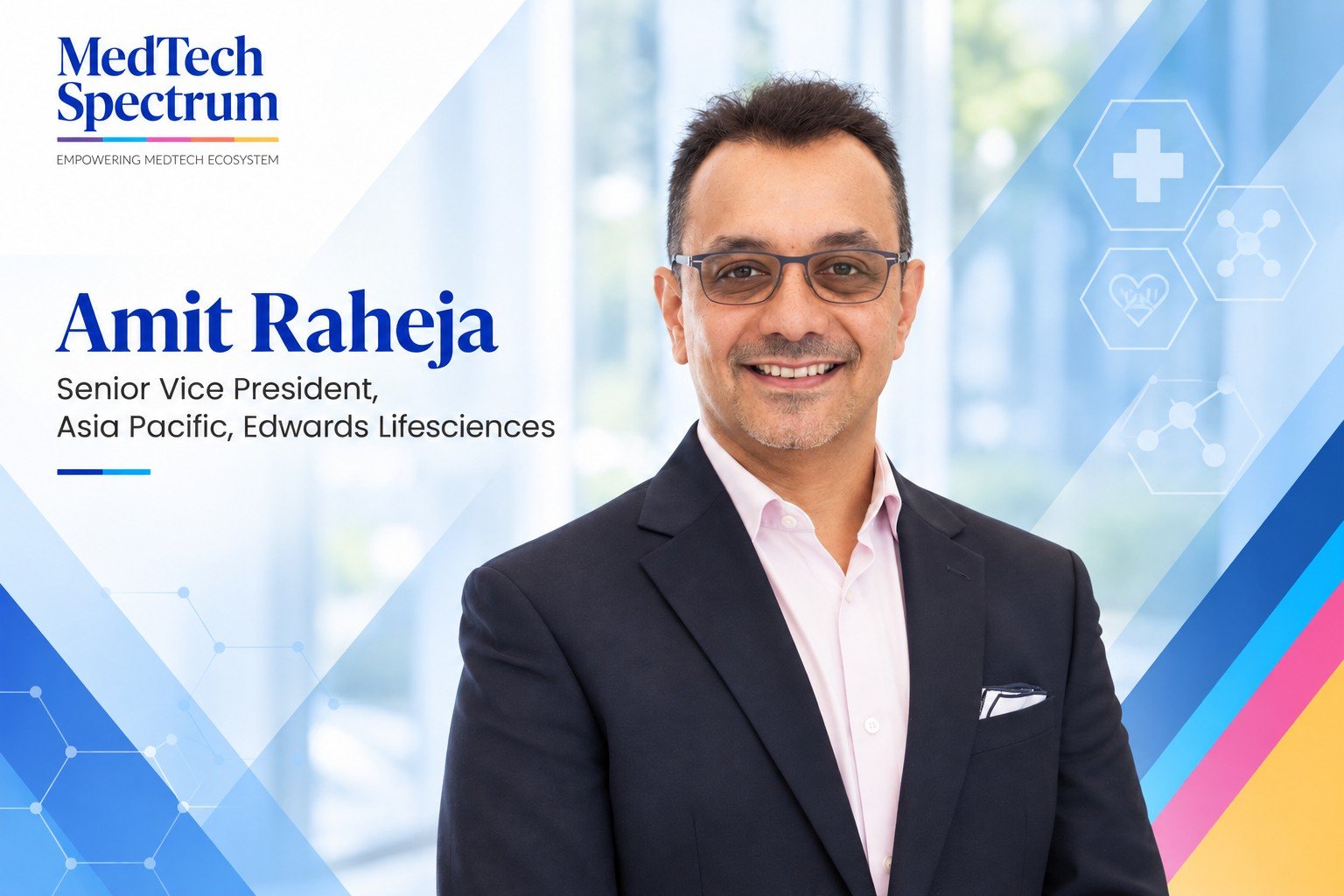
Amit Raheja, Senior Vice President, Asia Pacific at Edwards Lifesciences, discusses the region’s unmet needs in structural heart disease, how patient perspectives are shaping innovation, and why access depends on the broader healthcare ecosystem as much as the devices themselves.
APAC faces an issue of an aging population. Where do you see the greatest unmet needs in diagnosis and treatment across the region today?
There are a few different gaps between someone developing heart valve disease and actually getting treated, but I think the most important ones are awareness and diagnosis.
More than 80 million people worldwide live with some type of heart valve disease and that number matters even more as populations across Asia Pacific age.
The symptoms – things like shortness of breath, fatigue, reduced activity – can be easy to miss, especially in older people, because they sometimes get written off as normal ageing.
But diagnosis is only the first part of the journey. Patients then need to be referred properly, see a specialist, and have access to the right treatment.
So, when I think about this, I try to look at the whole journey, from awareness and earlier diagnosis, through to stronger referral pathways, clinical capability and timely treatment.
And because APAC is so varied, that journey looks different from market to market, which is exactly why collaboration across healthcare systems matters so much.
Edwards places strong emphasis on patient experience. How are insights from patients and caregivers influencing the way you think about future structural heart technologies and care pathways?
It starts with listening. Clinical evidence matters enormously, but we also must think about what it's actually like to live with structural heart disease.
Talking to patients helps us understand the whole journey – what happens before diagnosis, what motivates someone to finally seek care, and then what treatment, recovery and getting back to normal life actually look like for them.
We can't assume the patient journey we understood a few years ago still holds true today. How people find information, understand their condition and navigate the healthcare system keeps changing.
Practically, that listening shapes how we think about patient engagement, education, and even the questions we ask in our own research.
We've supported patient-focused research on treatment preferences, quality of life and barriers to care, because we want to know not just whether a treatment works, but whether it matters to the person receiving it.
That's really why ‘keeping the patient at the centre’ isn't just a phrase for us; it's how we try to operate.
Access to MedTech and treatment availability varies significantly across APAC. What are the main barriers to wider adoption, and what needs to change in areas such as referral, diagnosis, reimbursement, and specialist capacity?
APAC is such a diverse region, and every healthcare system is different, so there's no single fix here.
But if you trace the patient journey, a few things stand out: awareness and diagnosis, getting referred to a specialist, clinical capability, and then actually having access to the right treatment.
Heart valve disease can be treated surgically or through transcatheter approaches, and which one is right depends entirely on the patient, their condition and what they decide together with their care team.
So, improving access isn't just about putting a technology on the market; it's about building the capability and pathways around it so the right patients can actually reach specialist care.
That takes physicians, surgeons, hospitals, policymakers, regulators and payers all pulling in the same direction.
Each of them holds a different piece of the puzzle, from clinical skill to reimbursement to regulatory pathways.
As transcatheter and minimally invasive technologies continue to evolve, which areas of healthcare do you believe will see the most significant change over the next few years?
We are continuing to see significant innovation across structural heart care.
This has given physicians and patients more options than they've ever had.
Transcatheter technologies are a big part of that, but I want to be clear: surgical and transcatheter approaches both still matter, and the right procedure depends on the individual patient and what they decide with their care team.
We're also seeing that innovation spread across the aortic, mitral and tricuspid valves, not just one area.
What matters most to us at Edwards is that any innovation is backed by strong clinical evidence and responds to what patients need.
Structural heart is where our focus is, and where it's going to stay.
Beyond the devices themselves, how important are training, clinical workflow, and multidisciplinary collaboration in ensuring new structural heart technologies translate into better patient outcomes?
They are hugely important, because innovation isn't just about the device itself. You also need the clinical expertise and the healthcare system around it.
Structural heart care involves a team of people - physicians, surgeons, nurses, support staff - each playing a role somewhere along the patient's journey.
As technology and treatment options evolve, clinical teams need to evolve with them, so they have the knowledge and experience to identify the right patients and support their care properly.
Collaboration matters just as much, because patients' needs differ and so do the options available to them.
That's why we work closely with clinicians and healthcare systems across the region to help build that capability and those pathways.
At the end of the day, the technology, the clinical expertise and the care pathway all have to work together, or the innovation doesn't actually translate into better outcomes.
Looking ahead, what are Edwards Lifesciences’ priorities for expanding access to healthcare across Asia-Pacific?
We have three priorities.
First, keeping the patient at the centre of everything we do. Patient journeys keep evolving, so we need to keep listening and understanding where the unmet needs still are.
Second, continuing to bring meaningful structural heart innovation to patients across Asia Pacific, backed by strong clinical evidence. That means pushing forward on both surgical and transcatheter treatment.
And third, partnership and capability, working with physicians, surgeons, hospitals, regulators, policymakers and payers to strengthen awareness, diagnosis, clinical capability and treatment pathways.
We also need to keep working with partners to reach the patients who are still undiagnosed or underserved.
This can’t be done alone. Improving access takes the whole healthcare ecosystem working together.
At the end of the day, what we want is simple: help more patients with structural heart disease get timely, appropriate care.