Healthcare systems across Asia-Pacific are moving towards more integrated models of care, as patients look for simpler, more coordinated ways to manage their health. With fragmented provider networks, mixed public-private systems and varying levels of digital maturity across the region, the shift will not look the same in every market.
At the same time, artificial intelligence is becoming more relevant in both patient engagement and healthcare delivery. Consumers are increasingly using digital tools to understand diagnoses, manage treatment plans and navigate healthcare systems, while providers are exploring how AI can reduce administrative burden and support better care coordination.
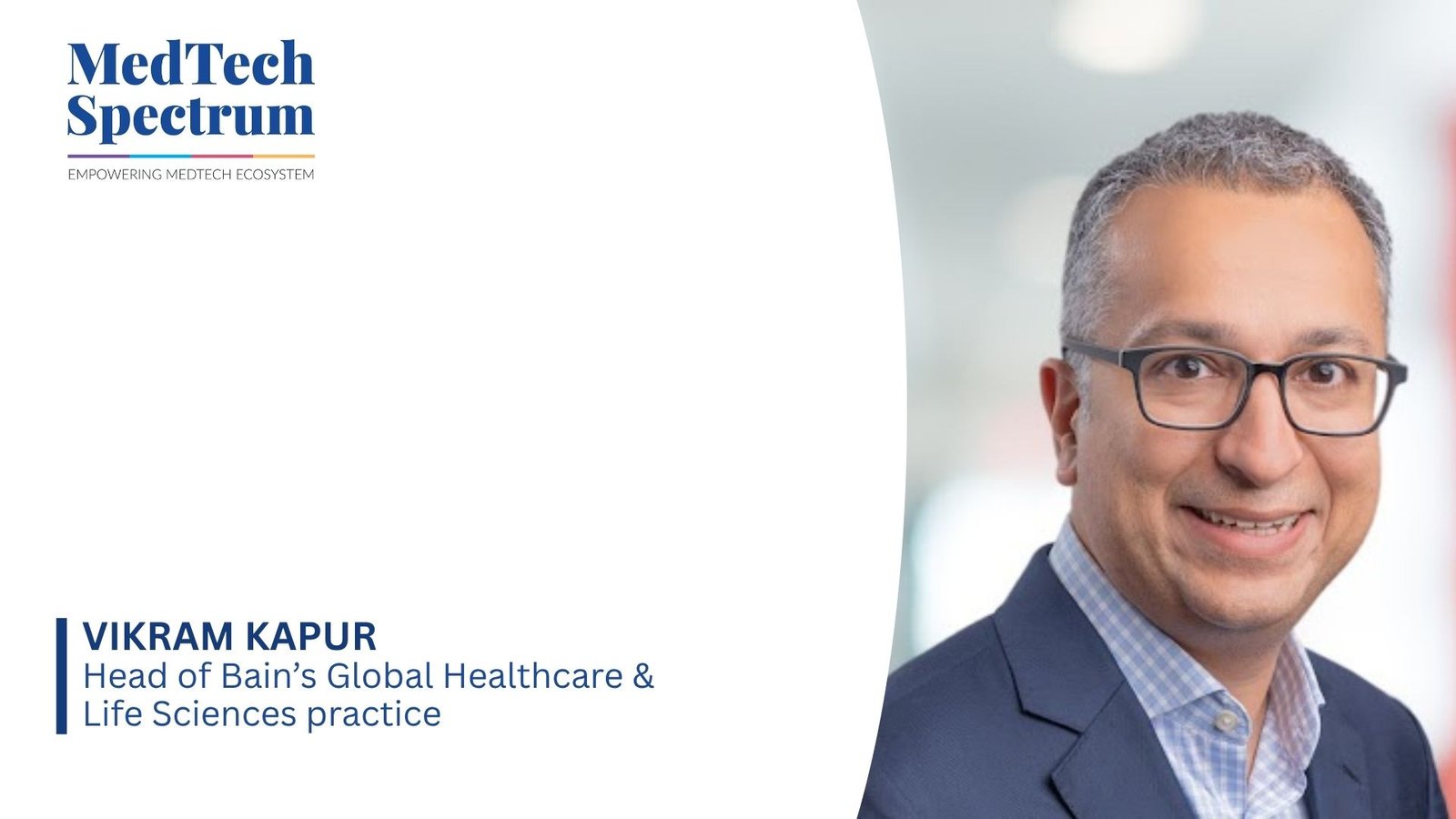
Speaking with Vikram Kapur, Head of Global Healthcare & Life Sciences practice at Bain & Company, to learn what a single healthcare touchpoint could look like in APAC, how hospitals and consumers should evolve with technology, and why clinician engagement is central to successful AI-enabled healthcare transformation.
The report shows that 95 percent of consumers want a single touchpoint to manage their healthcare. What would this realistically look like in APAC, given the region’s fragmented provider networks, mixed public-private systems and varying digital maturity?
The 95 percent figure reflects a near-universal consumer desire, but the form that single touchpoint takes will look very different across the region's markets, because the underlying healthcare systems, digital maturity, and consumer behaviour differ so significantly.
In markets with strong primary care traditions and high in-person preference, like Australia, the realistic model is a strengthened general practitioner anchoring a connected outpatient ecosystem, supported by AI tools that handle administrative tasks, maintain longitudinal records, and surface clinical decision support. The technology extends the clinician's reach rather than replacing the relationship.
In markets where primary care access is structurally weak, like Malaysia, the coordinator role will likely be filled by alternative entities. This could be a specialist hub, a pharmacy-led clinic network or a payer-sponsored navigation platform, for example.
China is an outlier in the region, with 76 percent of consumers scheduling regular preventive check-ups, 61 percent telehealth penetration, 54 percent of consumers preferring a single virtual touchpoint to manage their healthcare needs, and digital health companies now ranking among the top three most trusted stakeholders. The coordination point in China is increasingly a digital front door: an app or hotline that orchestrates physical and virtual care across providers, which is closer to what global digital health platforms have long aspired to build.
APAC is growing towards a more integrated healthcare system. How should hospitals and consumers evolve with the technology?
The direction of travel toward integration is real, but it must be deliberately built. Consumers across the region are clear about what they want: 95 percent prefer a single, trusted touchpoint to manage their healthcare, up from 70 percent in 2019. Realistically, care remains episodic and fragmented today.
For hospitals, this means evolving from inpatient-centric institutions into the anchors of broader outpatient ecosystems, integrating primary care, diagnostics, pharmacy, day surgery, and digital follow-up around the patient. Technology is the enabler: AI must be embedded deeply into clinical and operational workflows rather than layered on top of broken processes. The hospitals that will lead the next decade are those that combine modern data foundations and robust AI governance with the trusted human relationships that consumers continue to value most.
Consumers, for their part, are already evolving. Nearly 70 percent of APAC consumers use AI tools to better understand diagnoses or treatment plans and the majority view AI as a complement to, not a replacement for, their clinicians. The opportunity is to lean further into this active role: using AI to improve the patient experience, helping consumers navigate care, adhere to prescriptions, understand diagnosis and treatment plans, and solve billing questions, while continuing to rely primarily on clinicians to manage their care.
The future will likely be filled with better-informed, more engaged patients supported by healthcare providers that have deliberately built integrated, technology-enabled care around them.
Consumers and doctors appear increasingly open to AI-enabled healthcare, but the report also notes that many organisations are not ready to deploy AI at scale. What are the biggest gaps healthcare providers need to close before AI can move from pilot projects into core care delivery?
Providers must concentrate on a small number of bigger bets, reimagine the underlying workflows end-to-end, and modernise their workforce in lockstep. They must build the technology readiness and the people readiness together, not sequentially. We see five large gaps.
The first is treating AI as a feature, not a business transformation. Most providers are still running a use-case-and-tools playbook rather than deeply redesigning the three to five workflows that drive cost and outcomes.
The second is weak data and governance foundations. AI at scale needs modern data foundations, connected and real-time clinical data, and robust governance for safety, bias, and accountability. Yet security concerns top the roadblock list for more than half of healthcare buyers, and data readiness remains a major pain point.
The third is workforce modernisation lagging workflow change. AI transformation requires parallel investment in strategic workforce planning, learning and development, change management, and new talent models.
The fourth is insufficient clinician involvement. Clinicians consistently rank technology and tools among the professional dimensions they value most and are least satisfied with. To create champions and avoid stalling initiatives, clinicians must be co-architects of the AI redesign, not recipients of it.
The fifth is operating model and leadership readiness. Hybrid human-agent workforces need different operating models: flatter structures, revised human-agent decision rights, blended functional boundaries, and management systems that dynamically link workflow and workforce changes. Most leadership teams lack the skills and mindset to run this kind of transformation today, and few have the cross-functional governance to do it at enterprise scale.
The report identifies care coordination, value-based care, AI transformation and clinician engagement as strategic opportunities. Which of these do you think APAC healthcare systems should prioritise first, and why?
These opportunities are highly interconnected, and clinician engagement is a top priority because it is the connective tissue that determines whether the others, including care coordination, patient experience, value-based care, and AI transformation, are realised or stalled.
Care coordination depends on the trusted clinician relationships that anchor the patient journey. Clinician experience directly impacts patient experience. Value-based care depends on clinicians adhering to standardised pathways and sharing accountability for outcomes. AI transformation depends on clinicians acting as co-architects of workflow redesign.
Clinician engagement can be pursued through AI-enabled redesign of an organisation’s highest-burden clinical workflows, with clinicians positioned as co-architects of the change.
This approach directly addresses some of the top drivers of clinician attrition and low net promoter scores, including excessive workload, lack of recognition, limited involvement in strategic decision-making, and inadequate technology and tools. At the same time, it builds the organisational capability required for the deeper transformations ahead.