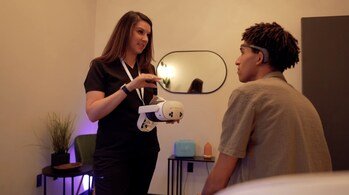
Healium has registered Healium Clinical with the US Food and Drug Administration as a Class II 510(k)-exempt biofeedback medical device, marking a regulatory milestone for its immersive digital health platform.
The registration addresses a growing clinical need for non-pharmacological tools that can support relaxation training, biofeedback and neurofeedback within supervised healthcare settings. As providers manage rising demand for behavioural health, anxiety reduction and patient self-regulation support, technologies with clearer regulatory positioning may be better placed for clinical evaluation and adoption.
Healium Clinical is a prescription-use, virtual reality software-enabled biofeedback, neurofeedback and relaxation training application intended for use under the supervision of a qualified healthcare professional. The platform uses virtual reality, mixed reality and real-time biometric feedback to translate physiological signals such as heart rate and EEG brainwave activity into immersive visual experiences.
The company differentiates the platform by combining biometric monitoring with interactive media, allowing users to observe and influence their physiological state in real time. Instead of relying on conventional graphs and monitors, Healium Clinical is designed to make relaxation training more visual and participatory for patients.
Healium states that the platform is supported by evidence in nine peer-reviewed journals, including findings that it can reduce anxiety or improve mood in as little as four minutes. A randomised controlled trial conducted at Mayo Clinic also observed significant reductions in preoperative anxiety among cardiac surgery patients.
The company’s broader platform has already gained traction in veteran and clinical care settings. Healium is used in VA hospitals nationwide and supports what the company describes as the VA’s largest deployment of in-home VR kits for veterans. It is also available to veterans through their VA provider and more than 6,000 Veterans of Foreign Wars posts across the United States.
The registration also formalises a distinction between Healium Wellness and Healium Clinical. Healium Wellness is designed for schools, corporations and non-clinical wellness environments, while Healium Clinical is intended for healthcare settings where providers may access patient information to support onboarding, monitoring, documentation and care-related workflows.
Commercial adoption will depend on how healthcare organisations evaluate immersive biofeedback within clinical workflows, reimbursement pathways, data privacy requirements and provider-supervised use models. The company also notes that Class II 510(k)-exempt registration does not constitute FDA premarket review, approval or clearance, making clear communication of regulatory status important for market positioning.
As digital therapeutics and immersive health technologies mature, platforms that combine patient engagement with clinical workflow readiness may gain relevance in behavioural health, perioperative care and chronic disease support. Healium Clinical’s next phase will depend on whether regulatory registration, evidence generation and healthcare deployment can translate into scalable clinical use.