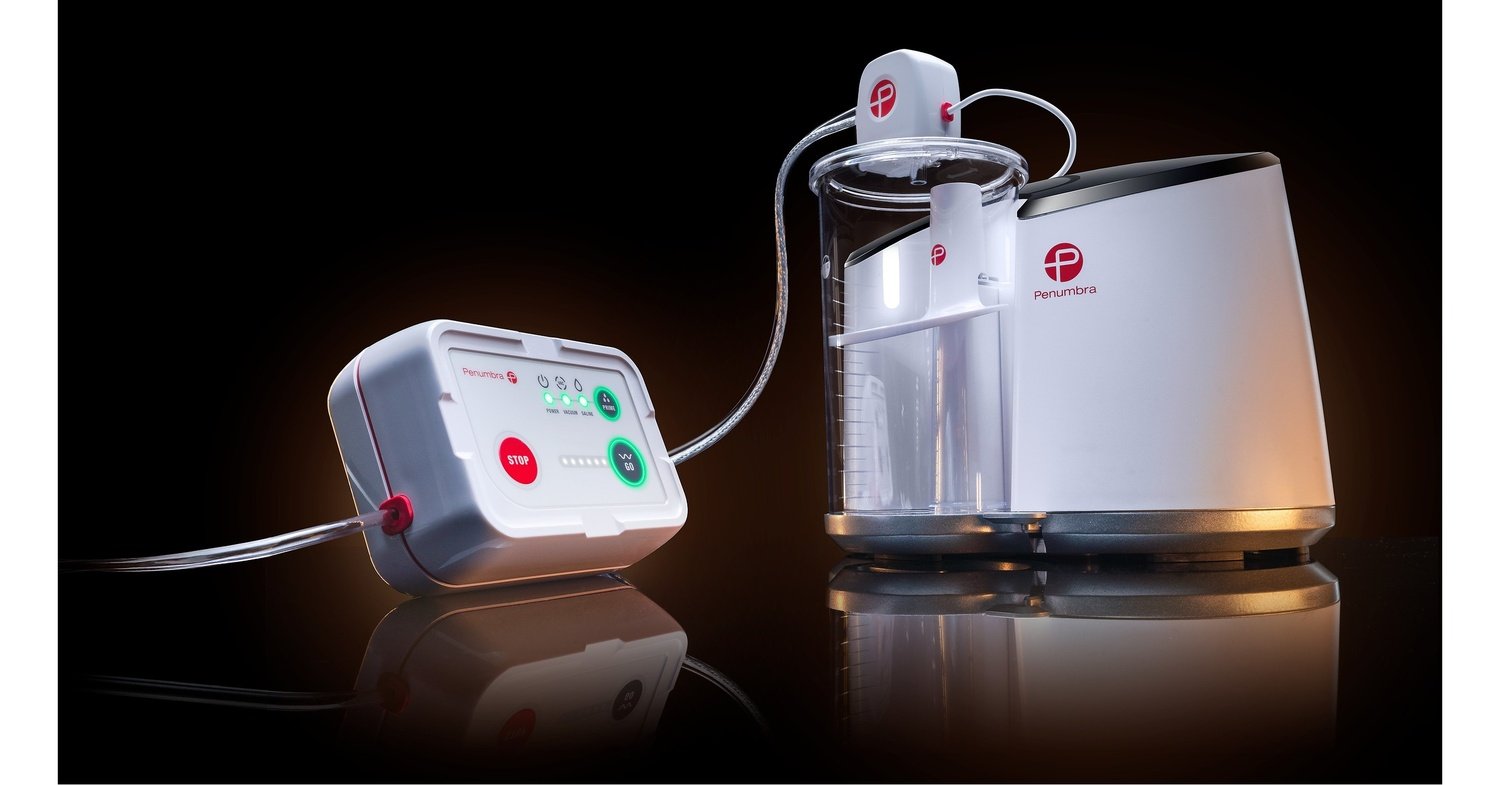
Penumbra has received U.S. FDA clearance for THUNDERBOLT, expanding its computer-assisted vacuum thrombectomy technology into acute ischemic stroke treatment.
The platform is designed to support clot removal in patients with acute ischemic stroke by using modulated aspiration at the site of occlusion. It will be pre-packaged with Penumbra’s RED 62, RED 68, RED 72 Silver Label or RED 72 Silver Label with SENDit technology catheters.
This is relevant because stroke care is highly time-sensitive. Delays in restoring blood flow can increase the risk of severe disability or death, making procedural speed, clot capture and device reliability important factors in neurointerventional care.
THUNDERBOLT differentiates itself by bringing Penumbra’s computer-assisted vacuum thrombectomy approach into the neurovascular setting. The company said the technology is designed to detect, fatigue and ingest clot at the site of occlusion, aiming to support more complete clot removal during aspiration thrombectomy.
The clearance also comes as stroke burden continues to rise. Penumbra cited analysis estimating that global stroke mortality could increase by 50 per cent between 2020 and 2050. In the U.S., a person experiences a stroke every 40 seconds, underlining the scale of the clinical need.
The target users are neurointerventional physicians and stroke centres treating emergent large vessel occlusion. For hospitals, adoption will depend on procedural outcomes, training, procurement costs, catheter compatibility and confidence that the platform can improve workflow without adding complexity.
Commercially, the clearance strengthens Penumbra’s neurovascular portfolio and broadens its computer-assisted thrombectomy strategy across vascular and neurovascular conditions. The company said its technologies are used by healthcare providers, hospitals and clinics in more than 100 countries.
The development reflects how stroke intervention is moving toward more automated, device-assisted approaches. Long-term uptake will depend on whether systems such as THUNDERBOLT can show consistent real-world benefits in speed, safety and patient outcomes.