As the government ramps up its nationwide HPV vaccination drive, leading medical experts say India stands at a pivotal moment in its fight against cervical cancer, with the potential to prevent thousands of deaths every year.
Every seven minutes, a woman in India dies of cervical cancer, making it the second-most common cancer among Indian women. The disease is primarily caused by the Human Papillomavirus (HPV), with types 16 and 18 accounting for nearly 82 per cent of cases in the country.
According to leading cancer expert Dr Swarupa Mitra, Director and Unit Head, Fortis Memorial Research Institute, New Delhi, the ongoing vaccination rollout could be a turning point. “For the first time, we have the scale, the science, and the policy alignment to tackle cervical cancer head-on. This is not just a vaccination drive – it is India’s best shot at eliminating a major cancer burden within a generation,” she said.
The government’s nationwide campaign, launched in February, aims to vaccinate adolescent girls across the country through government health facilities, significantly expanding access to a life-saving intervention. But Dr Swarupa emphasises that the real story is not just access – it is awareness. “Cervical cancer is one of the few cancers that is almost entirely preventable. The HPV vaccine, when given at the right age, offers near-complete protection against the most dangerous strains. The tragedy is not lack of science – it is lack of awareness,” she noted.
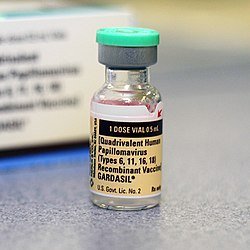
Globally approved vaccines such as Gardasil, Gardasil-9, and Cervarix, along with India’s indigenous Cervavac developed by the Serum Institute of India, are strengthening the country’s prevention arsenal. Yet, despite scientific consensus, vaccine hesitancy remains a barrier. “We still see hesitation driven by misinformation. Parents need to understand that these vaccines have been studied extensively and have a strong safety profile. Most side effects are mild and temporary. The far greater risk is leaving young girls unprotected,” Dr Swarupa said.
She adds that adolescence is a critical window for intervention, before exposure to the virus. “If we vaccinate early and combine that with regular screening later in life, we can drastically reduce cervical cancer incidence in India. This is a once-in-a-generation opportunity to change the trajectory of women’s health,” she said.
Dr Swarupa also underscores the importance of grassroots awareness. “Schools, primary health centres, and community networks will be key. This cannot be just a government programme – it has to become a public movement driven by informed families,” she added.
As the national rollout gathers pace, Dr Swarupa believes success will depend not just on supply, but on trust. “We have the tools. Now we must ensure people use them. If we get this right, future generations of women may never have to face cervical cancer the way we do today,” she said.