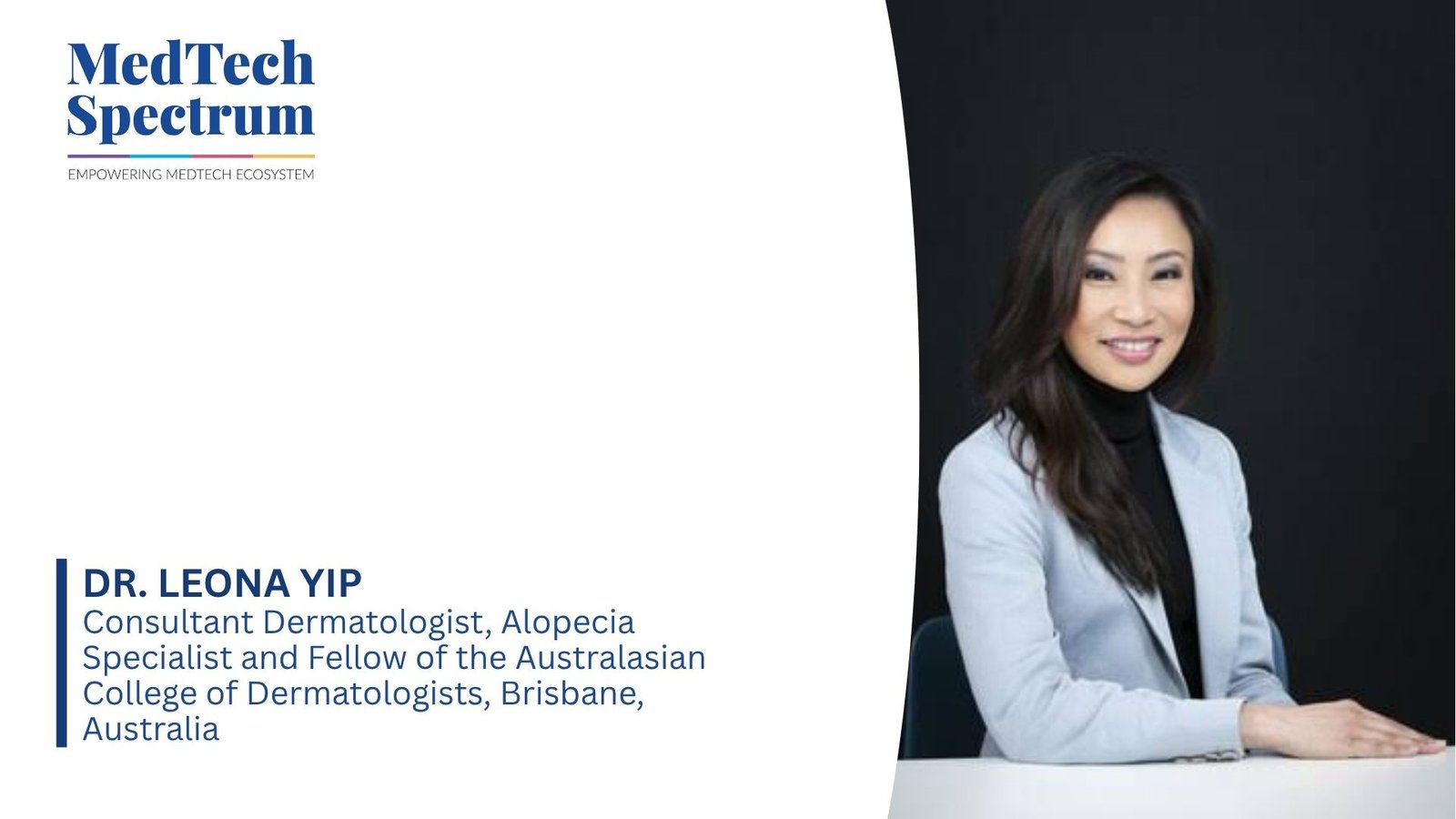
Hair loss is emerging as a growing clinical and public health concern, with androgenetic alopecia increasingly affecting younger adults and women worldwide. Beyond its physical manifestations, the condition can have a profound psychological impact, highlighting the need for earlier diagnosis, evidence-based treatment, and a more holistic approach to patient care. At the same time, advances in dermatology, including AI-assisted scalp imaging, digital diagnostics, regenerative medicine, and precision therapies, are transforming the way clinicians diagnose, monitor, and manage hair loss. In this interview with MedTech Spectrum, Dr Leona Yip, Consultant Dermatologist, Alopecia Specialist, and Fellow of the Australasian College of Dermatologists, Brisbane, Australia, shares her insights on the rising prevalence of androgenetic alopecia, the importance of early intervention, the role of lifestyle and environmental factors, and how emerging technologies and regenerative medicine are shaping the future of personalised hair loss management.
Recent evidence suggests that androgenetic alopecia is increasingly being diagnosed in teenagers and young adults. What factors are driving this trend, and how important is early diagnosis in improving long-term treatment outcomes?
While genetics remains the primary determinant of androgenetic alopecia susceptibility, growing evidence suggests that environmental and lifestyle factors may influence when and how soon the condition presents itself in predisposed individuals. Factors such as psychological stress, metabolic health, smoking, UV exposure, pollution, and even rapid weight loss have been proposed as contributors to oxidative stress and inflammation around the hair follicle, which may influence disease progression. Increased awareness of hair loss among younger individuals through social media and improved health literacy (i.e., recognising the signs of androgenetic alopecia earlier) have resulted in more seeking medical advice sooner. Identifying the condition early provides an opportunity to preserve existing hair density, slow down the condition's progression and optimise long-term scalp and hair health. Early diagnosis is particularly important because androgenetic alopecia is a progressive condition characterised by gradual miniaturisation of hair follicles. Once follicles become severely miniaturised, long-term treatment outcomes may be less favourable. Early intervention provides an opportunity to educate patients about the chronic nature of hair loss and management of the condition. In the future, scalp health may also serve as a marker of a person’s overall health. Various evidence suggests the association between androgenetic alopecia and underlying chronic systemic conditions such as metabolic syndrome. Hence, early detection and diagnosis of androgenetic alopecia may also be valuable for early clinical evaluation and risk stratification for other chronic conditions too.
While genetics remains the primary cause of androgenetic alopecia, lifestyle and environmental factors are gaining attention. What does current clinical evidence reveal about the role of stress, nutrition, pollution, metabolic health, and scalp health in accelerating hair loss?
Genetics remains the primary driver of androgenetic alopecia. However, there is emerging evidence that suggests that various lifestyle and environmental factors may influence disease progression or exacerbate hair shedding among those predisposed to the condition. Psychological stress, for example, has been associated with alterations in inflammatory pathways and hair cycle regulation. Although stress alone does not cause androgenetic alopecia, it may aggravate existing hair loss or trigger concurrent conditions such as telogen effluvium, which can make androgenetic alopecia appear more severe. Nutritional deficiencies such as inadequate iron and protein may compromise normal hair growth and should be assessed in appropriate patients. Similarly, metabolic conditions such as obesity, insulin resistance, and metabolic syndrome have been linked as risk factors associated with more severe forms of male androgenetic alopecia. There is good evidence that pollution, ultraviolet exposure and smoking induce oxidative stress within the scalp environment and cause direct hair follicle damage to accelerate hair loss. Overall, while these factors do not replace genetics as the primary cause of androgenetic alopecia, they act as risk factors or modifiers that can influence the manifestation of the disease and its progression.
Hair loss can have a significant psychological impact, particularly among younger individuals. How should dermatologists and healthcare providers adopt a more holistic approach that addresses both the physical and emotional aspects of the condition?
For many young people, having a head full of hair is important to their identity. Experiencing hair loss at a young age can often lead to anxiety, reduced self-confidence, social withdrawal, and, in some cases, depression and decreased quality of life. A holistic approach towards management of hair loss begins with the acknowledgement of the emotional and psychological burden the condition brings to the patient. Allowing patients to vocalise their concerns in a comfortable and approachable environment can help them understand the severity of their conditions and work towards a reasonable goal. Patient education is critical. Open conversations about expectations, as well as clear discussions about diagnosis and treatment options, can help to alleviate anxieties and encourage adherence. Many patients with hair loss feel vulnerable and are confused by the large amount of misinformation and marketing they see online and on social media. We should proactively address this with our patients, educate them and ground their expectations of unproven products, devices and supplements marketed online for hair loss – no matter how trendy it comes across on social media. Going viral does not equal credibility! Hair loss is not an end in itself and there are interventions to help slow down progression and improve hair regrowth. Ultimately, successful management of hair loss should address both follicular health and the patient’s overall wellbeing. In advanced cases, collaboration with psychologists, counsellors, or mental health professionals may be beneficial to support the patient’s journey.
Advances in dermatology are enabling earlier diagnosis and more personalised treatment strategies. What emerging technologies—such as AI-assisted scalp analysis, digital diagnostics, biomarkers, or precision medicine—do you believe will transform the management of androgenetic alopecia in the coming years?
The future of hair loss management is likely to become increasingly personalised and data-driven. Digital dermoscopy and high-resolution scalp imaging already allow clinicians to quantify hair density, follicular miniaturisation, and treatment response more accurately than visual assessment alone. Artificial intelligence has the potential to further enhance diagnosis by analysing millions of scalp images, identifying subtle disease patterns, and supporting earlier detection. We should also expect the rise of AI-driven tools to improve patient monitoring by objectively tracking treatment outcomes over time. Digital health platforms and telehealth may also improve access to specialist care, enabling earlier diagnosis and ongoing monitoring for patients who may not otherwise seek treatment. However, the best avenue to seek a reliable diagnosis and personalised treatment options is still with a properly qualified and experienced medical professional, like a dermatologist who commonly treats hair loss conditions - who understands and can interpret clinical nuances and evidence-based treatments, and who can translate scientific information into real-world practice.
Female pattern hair loss is often underdiagnosed despite affecting a substantial proportion of women. What are the key differences between male and female androgenetic alopecia, and how can clinicians improve awareness, diagnosis, and treatment among women?
Although androgenetic alopecia affects both men and women, the clinical presentation often differs significantly. This is why some experts prefer to call this condition male and female pattern hair loss, instead of the umbrella term “androgenetic alopecia”. Men typically develop recession of the frontal hairline and thinning at the crown, whereas women more commonly experience more diffuse thinning over the central scalp and a more visible central part line. Female pattern hair loss (FPHL) is frequently under-recognised as the changes can be gradual and less visually obvious in the early stages. Many women may also attribute thinning hair to ageing, stress, hormonal changes, or cosmetic damage and therefore delay seeking medical attention. Clinicians can improve outcomes by proactively discussing hair health during consultations, especially during perimenopause, and conducting relevant assessments when women report increased hair thinning, shedding or reduced hair volume. Additional public awareness to increase the population’s general literacy on FPHL is important. More can be done to educate the public that FPHL is common and treatable when diagnosed early. It is also important to convey to the public that there are easily accessible, established, evidence-based treatments such as topical minoxidil that can be used for the disease. Earlier recognition and intervention can help preserve remaining hair follicles and reduce the psychosocial burden attributed to hair loss as experienced by many women.
As research into hair biology continues to evolve, what innovations in regenerative medicine, topical therapies, biologics, or hair follicle science hold the greatest promise for the future of hair loss management?
Hair research is advancing rapidly, and several areas show significant promise. In regenerative medicine, investigators are exploring approaches that stimulate follicular regeneration and activate dormant hair follicles. These include stem cell-related therapies, growth factor-based approaches, and tissue engineering strategies designed to restore follicular function. Novel and promising topical formulations e.g. peptides and exosomes that require more robust evidence are also being developed to improve drug delivery, enhance efficacy, and reduce side effects. Advances in nanotechnology and targeted delivery systems may help optimise treatment penetration to the hair follicle. At the same time, a deeper understanding of hair follicle biology is revealing new molecular pathways involved in hair growth regulation. These discoveries may lead to the development of next-generation therapies that target specific signalling pathways implicated in follicular miniaturisation and cycling. Biologic and immunomodulatory approaches are also being investigated, particularly as researchers gain greater insight into the role of inflammation and the scalp microenvironment in hair disorders. While many of these innovations remain under investigation, they collectively represent an exciting future in which treatments become more effective, personalised, and capable of addressing the underlying biology of hair loss rather than simply slowing its progression.