With medical inflation in India hovering around 14–15 per cent, significantly outpacing general inflation and wage growth, health insurance affordability has emerged as a pressing concern for households across income segments. Rising premiums, coupled with the traditional lump-sum annual payment structure, are reshaping how consumers perceive and purchase medical insurance, particularly among first-time buyers, gig workers, and middle-income families.
At the same time, regulators such as the Insurance Regulatory and Development Authority of India (IRDAI) are driving the ambitious ‘Insurance for All’ vision, aiming to deepen penetration and expand access by 2047. However, bridging the gap between awareness and adoption requires more than product innovation; it demands structural shifts in how premiums are financed and paid.
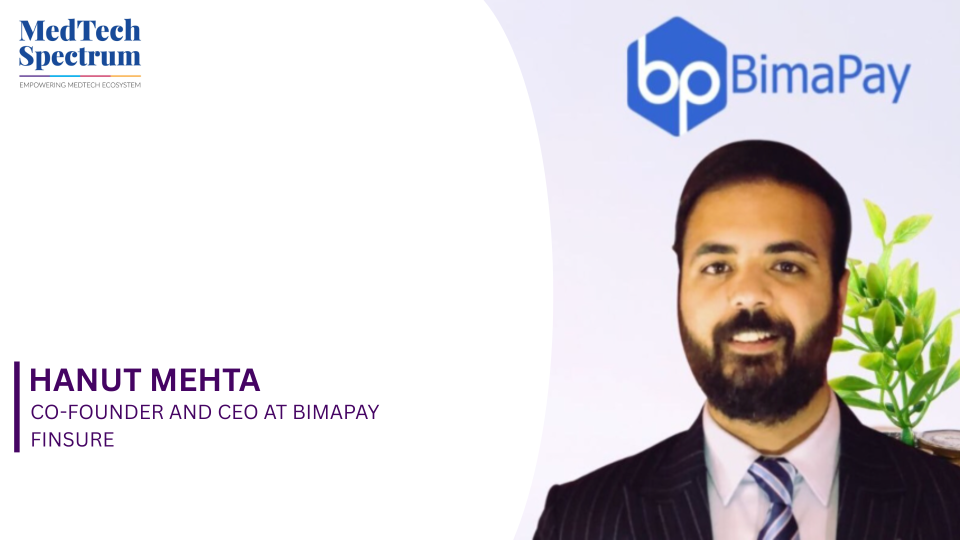
In this interview with MedTech Spectrum, Hanut Mehta, Co-Founder and CEO at Bimapay Finsureshares insights into how EMI-based premium financing is emerging as a critical enabler of accessibility, improving policy persistence, and helping consumers move from reactive purchasing to planned health risk management. The discussion explores evolving consumer behaviour, the role of fintech-led payment innovation, and the safeguards necessary to ensure responsible and transparent adoption in India’s fast-changing health insurance landscape.
Medical inflation in India continues to outpace general inflation, leading to higher premiums across health insurance products. From your vantage point, how is this reshaping consumer buying behaviour, particularly among first-time buyers and middle-income families?
Medical inflation in India, now nearing 14–15 per cent, is significantly outpacing wage growth, creating a 'liquidity shock' for middle-income families. We are seeing a shift where consumers are moving away from traditional comprehensive plans toward Base + Super Top-up combinations to manage costs. For first-time buyers, the high upfront premium is a major deterrent, leading many to settle for inadequate coverage just to fit their immediate annual budget.
Despite rising awareness about health risks and hospitalisation costs, insurance penetration in India remains relatively low. In your view, is affordability the primary barrier, or are there deeper structural and behavioural factors at play in medical insurance adoption?
While affordability is the most visible hurdle, the deeper barrier is the upfront 'lump-sum' payment model. In a market where monthly cash flow is prioritised, a Rs30,000 annual premium feels like a massive capital expense rather than a protection cost. Many consumers still view health insurance as a 'sunk cost' if they don't fall ill. Bridging this gap requires moving toward subscription-based or financed payment models that align with how Indians manage other essential expenses like rent or EMIs.
Flexible payment models and premium financing are gaining traction in health insurance. How do EMI-based premium options improve accessibility without increasing financial risk for consumers? What safeguards are necessary to ensure responsible adoption?
By converting a large annual premium into a monthly subscription, EMIs allow families to buy adequate coverage (e.g., Rs. 10 Lakhs instead of Rs. 3 Lakhs) without straining their monthly cash flow. To ensure responsible adoption, the industry must prioritise transparency in interest costs and use automated repayment mandates (e-NACH) to prevent accidental policy lapses that could leave a consumer uninsured during a crisis.
One of the biggest challenges in medical insurance is policy lapse due to premium shocks. Have you observed improvements in renewal rates and policy persistence where structured payment solutions are offered? What does the data indicate?
At BimaPay, we have observed that premium financing acts as a critical 'retention tool.' In our experience, policyholders are far less likely to lapse when a 20–30 per cent 'premium shock', caused by age or medical inflation, is spread over monthly EMIs. By smoothing out these spikes, we see a significant improvement in policy persistence and renewal rates, as the payment becomes a predictable monthly budget item rather than an unaffordable annual expense.
How are EMI-based premium payments changing the way young professionals, gig workers, and SMEs approach medical insurance? Are we seeing a shift from reactive buying to more planned health risk management?
For gig workers and SMEs, liquidity is everything. These segments often prioritise immediate business or living expenses over annual insurance premiums. We are seeing a shift where they now approach health insurance as a 'monthly utility.' This 'pay-as-you-go' mindset, facilitated by premium financing, is moving them from reactive, last-minute buying to a more planned, high-sum-insured risk management strategy.
IRDAI’s ‘Insurance for All’ vision hinges on expanding accessibility and inclusion. What role can fintech-led payment innovation play in accelerating health insurance penetration while ensuring transparency, compliance, and consumer protection?
Answer 6. Fintech-led payment innovation is the essential 'last-mile' bridge for IRDAI’s 2047 vision. By digitising the onboarding journey and removing the barrier of upfront costs, fintechs enable deeper inclusion in Tier 2 and 3 markets. This structural shift ensures that transparency and accessibility are not just goals, but a functional reality for the millions who remain underinsured due to immediate liquidity constraints.