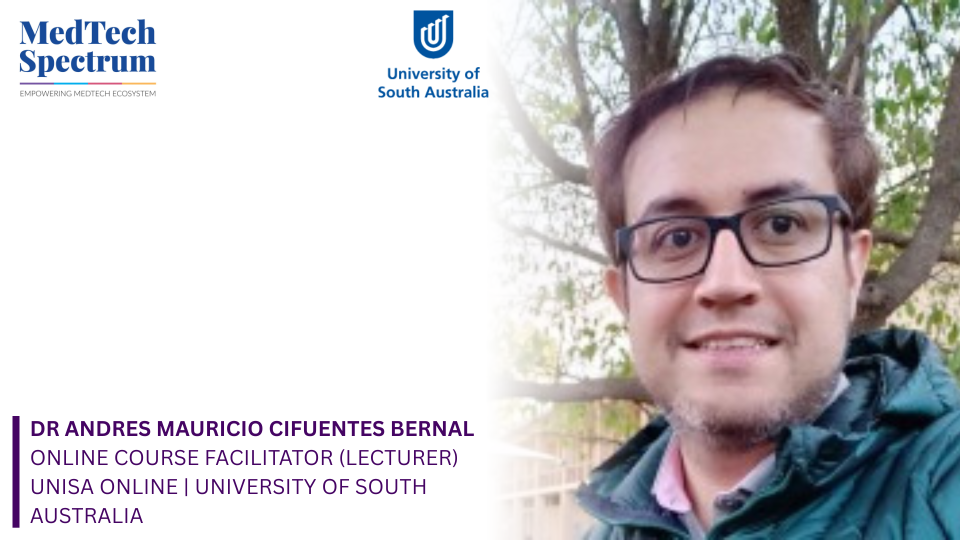
Artificial intelligence is reshaping cancer research, but a new study from the University of South Australia pushes the boundaries even further. Moving beyond the traditional focus on single gene mutations, the research led by Dr Andrés Mauricio Cifuentes Bernal reveals that tumour progression is driven by complex, cooperative gene networks, a discovery that challenges long-standing assumptions in cancer biology.
In this exclusive MedTech Spectrum interview, Dr Cifuentes Bernal explains how his AI-powered framework uncovers hidden cancer-associated genes, including those that are not mutated yet still play a pivotal role in tumour behaviour. He discusses why conventional genomics tools overlook key drivers of cancer evolution, how his method captures the dynamic interactions within gene networks, and the implications for next-generation diagnostics, precision oncology, and therapeutic development.
From improving outcomes for patients who lack classic driver mutations to exploring wider applications in autoimmune, metabolic, and neurodegenerative diseases, Dr Cifuentes Bernal outlines a transformative vision for how AI can deepen our understanding of complex biological systems — as long as it is deployed responsibly, transparently, and with robust safeguards.
Your study highlights that tumour progression is driven by cooperating gene groups rather than single mutations. How does this shift our fundamental understanding of cancer biology, and what does it mean for future diagnostic approaches?
One of the findings of our study is that cancer behaves far less like a single faulty switch and much more like a team of genes working together in the wrong direction. Instead of one mutation steering the disease, it’s the collective behaviour and interactions between genes that push tumours to grow and evolve.
This shift is important because it changes how we think about cancer at a fundamental level. It suggests we should be looking not only for mutated genes (damaged genes), but for how genes interactions (with and without mutations) change over time. For diagnosis, this means future tools could move beyond simply scanning for known mutations and instead detect patterns of coordinated gene activity, a much more dynamic and informative picture of how a tumour is progressing.
Most traditional cancer genomics tools focus on high-frequency mutations. What were the key limitations in existing analytical methods that prompted your team to develop this AI-based framework?
The main issue is that classic tools are excellent at counting frequent mutations, but cancer isn’t that simple. Many important gene changes are:
rare,
not mutations at all,
or only visible when viewed over time.
Traditional approaches also tend to treat tumours as static snapshots. They rarely capture how genes influence one another as the disease develops. And most importantly, they often show correlation rather than true causation.
These gaps inspired us to build a method that could handle the dynamic, interactive, and causal nature of cancer, something existing tools weren’t designed to do.
Your AI system was able to uncover previously hidden cancer-associated genes that are not mutated but still influence disease progression. How significant is this finding for precision oncology?
It’s extremely significant. For years, precision oncology has understandably focused on mutations, because they’re concrete and easy to detect. But not all patients have the famous or commonly known mutations (like TP53, BRCA1/2, or PIK3CA) that many modern cancer drugs are designed to target.
Our system revealed that non-mutated genes can still drive the disease through their expression patterns and interactions with others. This is a major step forward because it expands the pool of potential biomarkers and therapeutic targets.
In practical terms, it means we can begin identifying influential genes that were invisible to mutation-based tools, giving clinicians more options for patients who previously had few.
The method performed strongly using large breast cancer datasets. How adaptable is it to other cancer types, and what validation studies are you planning next?
One of the strengths of our approach is that it isn’t built around breast cancer specifically, it’s built around understanding how genes interact and change over time. Those principles apply to essentially all cancers. So, we expect the method to adapt well to other tumour types, whether that’s lung, ovarian, colorectal, or prostate cancer.
For next steps, we’re planning to test the method across multiple independent cancer datasets. We’re also very interested in exploring its use beyond cancer, to diseases where disrupted gene networks play a big role, for example autoimmune conditions like rheumatoid arthritis or lupus, metabolic diseases such as type 2 diabetes, and even neurodegenerative disorders like Alzheimer’s disease. We’re looking forward to working with experimental teams to validate our predictions in the lab and, longer term, to see how this framework performs in real clinical samples collected over time.
Identifying cooperative gene networks could open doors to new therapeutic targets. What potential clinical applications do you foresee, particularly for patients with cancers that lack "classic" driver mutations?
Our approach gives us a new way to “read” tumours that don’t fit the traditional mutation-based model. This is where the clinical potential becomes especially exciting. For patients without well-known driver mutations, treatment choices can be limited. By identifying gene networks that collectively drive disease, we open up several possibilities:
targeting the network hubs, rather than relying on any single mutated gene.
developing personalised treatments that disrupt the specific gene interactions active in a patient’s tumour.
and identifying early warning signals for aggressive disease, even when mutations aren’t present.
AI is becoming increasingly integrated into biomedical research. From your perspective, what safeguards and best practices are essential to ensure AI-driven discoveries translate safely and effectively into clinical settings?
I think AI can do a lot of good in biomedicine, but only if we’re careful about how we use it. It can’t be a black box. If an AI system suggests a gene or a treatment option, we need some idea why. Clinicians and researchers have to be able to question the logic, not just trust the output blindly.
The other key issue is robustness. A model that only works on one neat dataset in a lab isn’t very helpful. We need to see it hold up across different hospitals, populations, and technologies, while also looking after basics like privacy and avoiding bias. If we treat AI as a powerful tool rather than a magic oracle, and hold it to the same standards as any other method in medicine, it can genuinely help us move discoveries into the clinic safely.