As Florida grapples with one of the highest rates of mental illness in the US alongside a persistent shortage of behavioural health services, innovative care models are becoming critical to closing the treatment gap. River Oaks Treatment Centre, an American Addiction Centres facility, has recently expanded its clinical footprint with a dedicated residential Primary Mental Health program aimed at providing earlier, sustained and integrated care for individuals before crises escalate into emergencies.
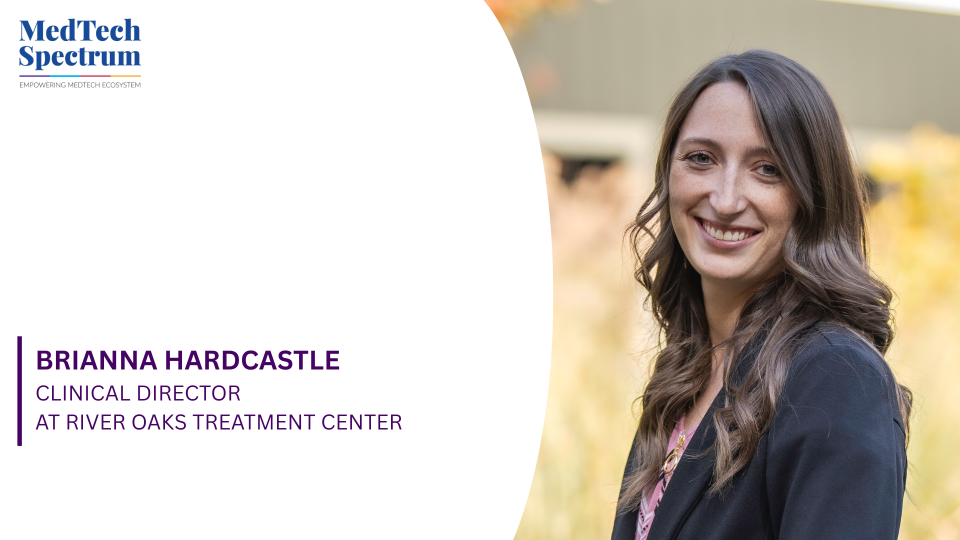
In this interview, Brianna Hardcastle, Clinical Director at River Oaks Treatment Centre, discusses how the new inpatient mental health unit is addressing service gaps, the role of integrated treatment for co-occurring disorders, and how residential care can ease pressure on emergency departments while improving long-term outcomes. She also shares her perspective on the future of inpatient mental health services amid rising demand, workforce constraints and the growing push for accessible, patient-centred care.
Florida ranks among the highest in mental illness prevalence while facing a shortage of services. What specific gaps does River Oaks’ new inpatient mental health unit aim to address?
When people need mental health services, they should be able to get them early and easily. We know that the earlier someone receives treatment, the better their outcomes.
By expanding our services to include residential, non-hospital mental health treatment, we’re able to support individuals before they reach a crisis point. In a state facing a significant shortage of mental health resources, many people don’t know where to turn and often delay seeking help until their condition has worsened to the point that they can no longer function or advocate for themselves.
Our sub-acute primary mental health program offers an earlier, voluntary entry point to care a person can enter before a situation becomes a life-threatening emergency and they are forced into acute care. While acute care is essential, it is inherently short-term and crisis-driven. Without adequate follow-up, individuals often return to the same challenges that brought them into crisis. By offering sustained care over 90 days or more, we give patients the time and structure needed to stabilize, connect with ongoing supports, and return to their lives with a far greater likelihood of long-term success.
Our program is also unique in that we not only address the primary mental health diagnosis but also any secondary issues with substance misuse or addiction (though patients need not have a substance use history to be admitted to the program). Drug and alcohol use is a very common maladaptive coping mechanism for mental health symptoms, and integrated treatment that addresses both issues is critical to long-term success after treatment.
How does expanding from addiction and co-occurring disorder treatment into primary mental health care change River Oaks Treatment Centre’s clinical approach and patient mix?
Expanding into primary mental health care doesn’t fundamentally change our patient mix. The majority of individuals who come to us for substance use treatment already have co-occurring mental health disorders, so we are already treating a diverse mix of patients who are dealing with mental health struggles. The primary mental health program simply allows us to serve people who have a primary mental health diagnosis, including those for whom substance use is present but secondary to an underlying psychiatric condition.
We have traditionally had quite a diverse patient mix, and that hasn’t changed in the new program. And even though our patients come from diverse backgrounds, we see them relating well to each other because of their shared experiences, struggles, and recovery goals.
What evidence-based therapies and care models are central to the inpatient mental health program, particularly for conditions like depression, anxiety, and PTSD?
Clinically, our approach remains consistent. We use evidence-based modalities that are effective across both addiction and mental health diagnoses. These include CBT, DBT, motivational interviewing, and, when appropriate, EMDR. These approaches allow us to address substance use and mental health concerns simultaneously rather than in isolation.
Core components of our primary mental health program also include:
Skill-building where patients learn life skills such as career planning and financial management.
Art and music activities.
Medication management.
Medication-assisted treatment (MAT).
We provide all of this in a small, structured setting separate from our substance use disorder facility where our patients get a great deal of personal attention and are able to stabilize and develop healthy routines and habits they can take with them and build upon when they leave the program.
Integrated care is increasingly emphasised in behavioural health. How does River Oaks coordinate treatment for patients with both mental health and substance use challenges?
Many people reach out knowing they need help but not necessarily knowing exactly what type of treatment or what level of care they require. Some may initially seek addiction treatment but are actually struggling primarily with a mental health disorder.
Our admissions team does a fantastic job of evaluating patients based on their specific needs in order to ensure they are placed into the program that would be the best fit. We differentiate between primary mental health and primary substance use disorder care based on factors such as recent substance use, a person’s ability to remain abstinent independently, and the severity of presenting mental health symptoms. Once we’ve thoroughly assessed those and other factors, we place them in the program that’s most appropriate for them.
From a systems perspective, how can facilities like River Oaks help reduce pressure on emergency departments and improve continuity of mental health care in Florida?
Primary mental health residential programs like the one at River Oaks Treatment Center provide early, comprehensive support that helps address mental health concerns before they escalate into life-threatening crises, easing the burden on local emergency departments. By offering care in a longer-term residential setting, we give patients the time and structure needed to truly stabilize, increasing the likelihood that they can successfully transition to and remain engaged in traditional outpatient care after discharge from residential treatment.
Looking ahead, how do you see inpatient mental health services evolving in response to rising demand, workforce shortages, and the broader push for accessible, patient-centred care?
Looking ahead, we expect inpatient and residential mental health services to continue evolving in response to both growing demand and changing patient needs. In Florida, people are facing increasing economic and family-related stressors, while at the same time awareness of mental health and willingness to seek treatment are rising as stigma declines. Together, these trends are expanding not only the demand for care, but also the diversity of individuals seeking support.
As this demand grows, we’re seeing that many individuals (particularly those living with chronic mental health conditions) need more than traditional outpatient therapy alone. Mental health treatment is an ongoing process that requires sustained engagement and active participation, and for some patients, a single outpatient session each week simply isn’t enough to support that work or maintain momentum.
Inpatient and residential settings are uniquely positioned to support patients who need a more intensive treatment environment but don’t necessarily need to be hospitalized. They allow for real-time monitoring, integrated therapy and medication management, and continuous clinical adjustment. By treating the whole person and maintaining therapeutic momentum, these programs can deliver more responsive, effective care while helping patients build a stronger foundation for long-term stability after discharge.