As fertility rates decline globally and demand for assisted reproductive technologies continues to rise, the IVF industry is under increasing pressure to improve accessibility, efficiency, and clinical outcomes. Yet many critical laboratory processes remain heavily dependent on manual expertise, leading to variability in results and limiting the scalability of fertility care.
Overture Life is seeking to address these challenges through automation, robotics, and artificial intelligence. The company’s automated vitrification platform, DaVitri, is designed to standardise one of the most delicate steps in the IVF process, cryopreservation of eggs and embryos by replacing manual handling with a microfluidic, software-controlled system. Following its recent national-scale deployment in Turkey through a partnership with Tekservis, Overture is advancing its vision of building a fully automated and reproducible IVF laboratory.
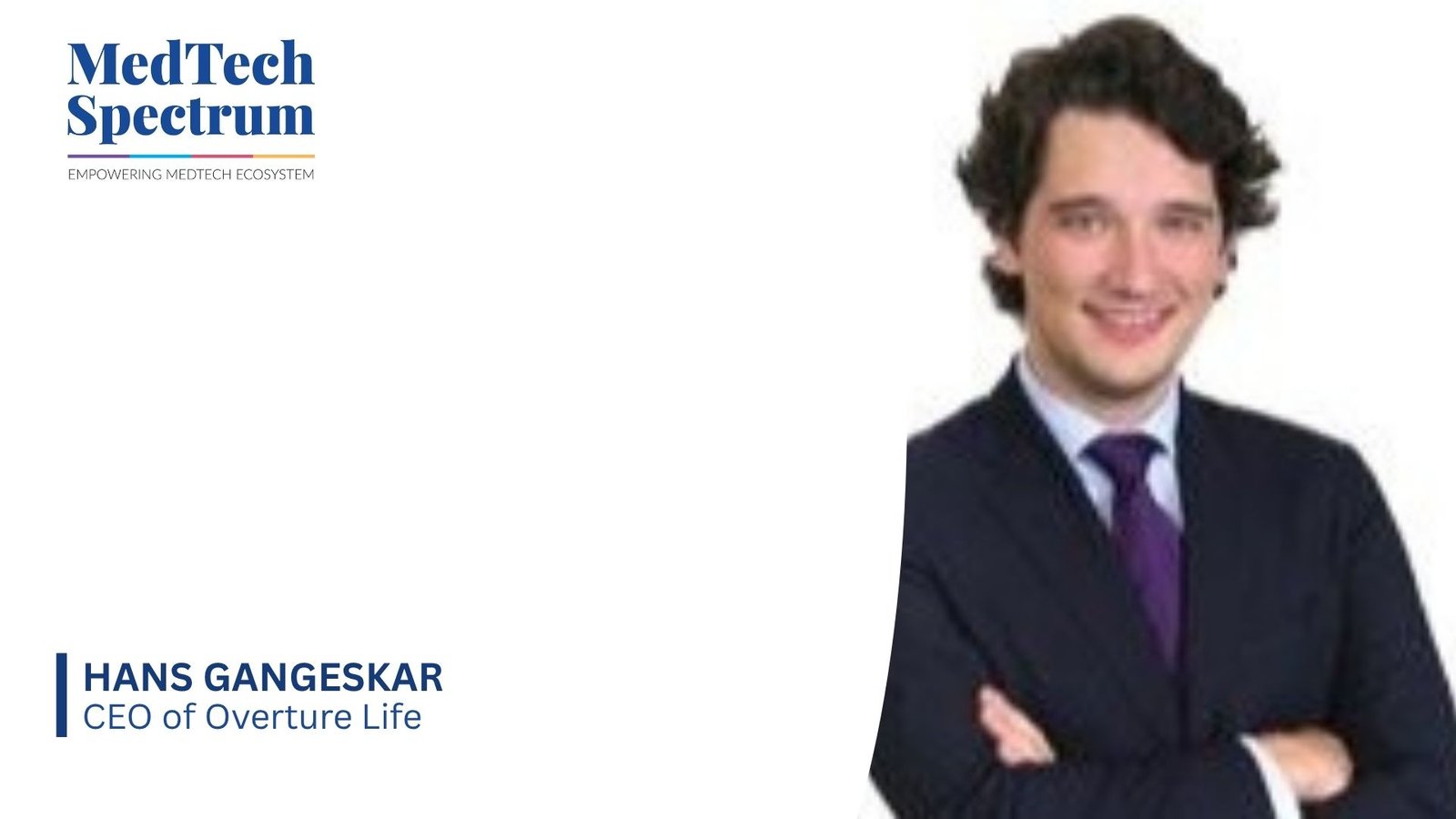
In this exclusive interview with MedTech Spectrum, Hans Gangeskar, CEO of Overture Life, discusses the technological innovations behind DaVitri, the role of automation in expanding access to fertility care, the strategic significance of the Turkish market, and how robotics and AI are poised to transform reproductive medicine in the years ahead.
Overture Life has positioned DaVitri as a solution to reduce variability in IVF outcomes. What were the key technological and clinical challenges that inspired the development of this automated vitrification platform?
Human variability is the core problem. Manual vitrification requires an embryologist to perform highly precise cryoprotectant exchanges by hand, so timing, technique, and fine motor control all affect whether eggs survive freezing and develop into blastocysts after thawing. Success rates vary not just from clinic to clinic but from operator to operator and even from morning to afternoon. The limitation isn't a lack of scientific knowledge; it's that the process has always depended on the person performing it. DaVitri was built to remove that variability.
How does DaVitri's microfluidic and software-controlled approach improve consistency, reproducibility, and workflow efficiency compared with conventional manual methods?
The system automates the complex, highly precise exchange of cryoprotectants, drawing water out of the egg and replacing it with compounds like ethylene glycol, dimethyl sulfoxide, and sugars, with a level of precision and repeatability that human hands simply can't match. The clinical results reflect that we see 12% more transferable embryos compared to conventional freezing, along with early indications of reduced aneuploidy. On the operational side, the system reduces lab infrastructure requirements, lowering the cost of opening and running a clinic.
What factors made Turkey an attractive market for this national-scale deployment, and what impact do you expect the rollout to have on fertility care across the region?
Turkey's fertility rate has fallen to 1.42, which is among the steepest declines in Europe over the past decade. Turkey president Recep Tayyip Erdoğan and the national government have made reversing that trend a national priority. At the same time, women are delaying their first pregnancy, with the average age now at 27.5 for having their first child. That combination of demographic pressure and delayed family formation drives real demand for assisted reproduction, which made Turkey a natural fit for a technology designed to expand access to fertility care.
The regional impact comes from what automation does to capacity and cost. By standardising vitrification and reducing the lab infrastructure a clinic needs, the rollout lets Tekservis's network treat more patients without sacrificing quality, and it makes opening new clinics viable in places where the economics previously didn't work. Turkey also sits at a crossroads between Europe, the Middle East, and Central Asia, and it has long drawn cross-border fertility patients. A successful national-scale deployment there establishes a model that neighbouring markets facing the same demographic pressures can follow.
How does the integration of DaVitri fit into Overture's broader vision of building a fully automated and standardised IVF laboratory?
DaVitri is our highest priority because it directly enables more clinics to offer IVF, more so right now than even our ICSI (Intracytoplasmic Sperm Injection) robot. The broader goal is a fully automated embryology lab where DaVitri handles vitrification, the ICSI robot handles fertilisation, and a dish-preparation robot handles culture setup, with each product addressing a distinct bottleneck in the workflow. IVF has always been artisanal, with outcomes tied to individual skill. The standardisation we're building toward makes outcomes reliable.
As global demand for fertility preservation rises, how can automation help clinics scale operations while maintaining high standards of quality and patient outcomes?
The U.S. performs roughly 900 IVF cycles per million women. Continental Europe does over 3,000, and even that reflects enormous unmet demand. A big part of why supply is so constrained is cost; labs run about $4 million to build. Our North Star is lowering that cost. We can't put a million dollars' worth of equipment into 50,000 gynaecologists' offices across America and expect anything to change. Automation is what makes the math work, and fewer failed cycles mean a faster, less costly path to the outcome patients are actually there for.
What clinical and operational metrics will Overture and Tekservis monitor during this rollout, and how will these results shape future international deployments?
The initial focus will be on vitrification outcomes across Tekservis's partner clinics, with further expansion tied to regulatory pathways, clinic integration timelines, and ongoing clinical validation. The metrics that matter most are the ones DaVitri is designed to move: consistency of cryoprotectant exposure, egg and embryo survival rates, and blastocyst development rates. This partnership establishes a reference point for national-scale deployment that we expect to inform how we approach other markets going forward.
Looking ahead, what additional opportunities do you see for robotics and AI in reproductive medicine, and how close are we to achieving a fully digital and reproducible IVF workflow?
The pipeline is substantial. The ICSI robot uses computer vision and neural networks to perform injections autonomously. We have a robot that automates the complex liquid patterns that embryologists spend hours preparing on culture dishes every day. And we're developing a metabolomic test that uses mass spectrometry and machine learning to analyse embryo culture media and predict implantation rates. Beyond our own products, large clinic networks are building AI algorithms to optimise ovarian stimulation protocols, which could meaningfully reduce the trial-and-error that sends patients through multiple cycles. A fully digital, reproducible workflow is still in its early days, but it will bear fruit through trials and early deployments.