
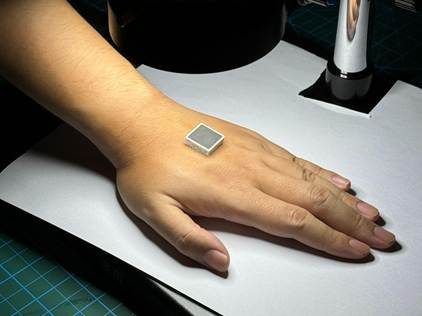
The Singapore–MIT Alliance for Research and Technology (SMART), Massachusetts Institute of Technology’s (MIT) research enterprise in Singapore, has launched Wearable Imaging for Transforming Elderly Care (WITEC) a multi-million-dollar initiative to create the world’s first wearable ultrasound imaging system capable of 48-hour intermittent cardiovascular monitoring. The system could support the management of chronic conditions such as hypertension and heart failure by shifting care from reactive and hospital-based to preventative and home-centred.
If successful, the project could offer clinicians ongoing clinical insights instead of occasional snapshots from periodic scans or check-ups, enabling earlier detection, timely intervention and truly personalised care.
WITEC is Singapore’s first centre dedicated to foundational research and development in wearable ultrasound imaging. Funded by the National Research Foundation (NRF) Singapore under its Campus for Research Excellence and Technological Enterprise (CREATE) programme, the initiative brings together researchers from MIT, Nanyang Technological University (NTU Singapore) and the National University of Singapore (NUS). Tan Tock Seng Hospital (TTSH) will serve as the clinical partner and will lead patient trials to validate long-term heart imaging for chronic cardiovascular disease management.
“Addressing society’s most pressing challenges requires innovative, interdisciplinary thinking,” said Bruce Tidor, Chief Executive Officer and Director (Interim) of SMART. “Building on SMART’s long legacy in Singapore as a hub for research and innovation, WITEC will harness expertise from MIT and Singapore’s leading institutions to advance transformative research that creates real-world impact. This is the kind of collaborative work that not only pushes the boundaries of knowledge but also redefines what is possible for the future of healthcare.”
Supporting this effort is a newly equipped WITEC laboratory featuring Southeast Asia’s first Nanoscribe Quantum X sub-micrometre 3D printer and Singapore’s first Verasonics Vantage NXT 256 ultrasonic imaging system.
The Nanoscribe printer enables fabrication at sub-micrometre resolution — far beyond the capabilities of conventional 3D printers that typically operate at millimetre or micrometre scales. This allows researchers to design and prototype ultra-precise bioadhesive materials and device interfaces at the scale of single cells or tissue structures, ensuring skin-safe adhesion and stable, long-term imaging performance.
With these capabilities, the WITEC team aims to deliver a breakthrough in wearable medical imaging technology and lay the groundwork for more accessible, continuous and data-driven cardiovascular care.