The Union Budget 2026 has drawn a positive response from leading healthcare specialists, who say the government’s renewed emphasis on preventive care, biopharma manufacturing, affordability of lifesaving medicines, and workforce capacity building could mark a turning point for India’s healthcare ecosystem.
Key measures such as the creation of five medical value tourism hubs, the Biotech SHAKTI initiative, expansion of biopharma manufacturing, training of 1.5 lakh caregivers, and customs duty reductions on high-end cancer drugs are being seen as critical steps toward improving access to quality care, particularly in Tier II and Tier III cities.
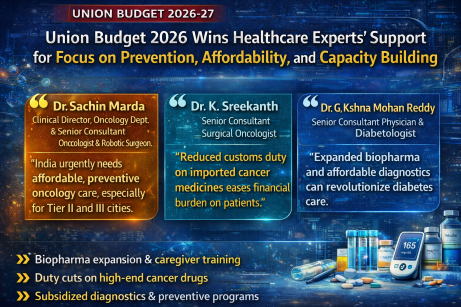
Dr. Sachin Marda, Clinical Director, Oncology Department, and Senior Consultant Oncologist and Robotic Surgeon at Yashoda Hospitals, Hyderabad, described Budget 2026 as one of the most impactful for healthcare. He said the initiatives will not only strengthen India’s position in clinical trials but also address the rising burden of non-communicable diseases such as cancer, diabetes, and autoimmune disorders.
“Prevention remains the only sustainable solution,” Dr. Marda said, adding that India urgently needs population-based screening, early detection, and affordable cancer care, especially beyond metro cities. He emphasized the need to prioritise preventive oncology through tobacco control, nutrition awareness, vaccination, and screening for oral, breast, and cervical cancers.
Welcoming the reduction in customs duty on imported cancer medicines, Dr. K. Sreekanth, Senior Consultant Surgical Oncologist at Yashoda Hospitals, said lower duties would directly translate into reduced retail prices, easing the financial burden on patients. He noted that high drug costs often force patients to discontinue treatment midway, and the move is expected to improve treatment continuity, reduce dropouts, and enhance survival rates.
From a chronic disease perspective, Dr. G. Krishna Mohan Reddy, Senior Consultant Physician and Diabetologist at Yashoda Hospitals, said Budget 2026 reflects a strong patient-centric vision. He highlighted that expanded biopharma manufacturing, subsidised diagnostics, preventive programmes, and improved access to insulin could significantly improve diabetes care, particularly outside metro regions.
Experts agree that with effective implementation, the Budget can help shift India’s healthcare system toward prevention-based, holistic care while strengthening national productivity and global competitiveness.