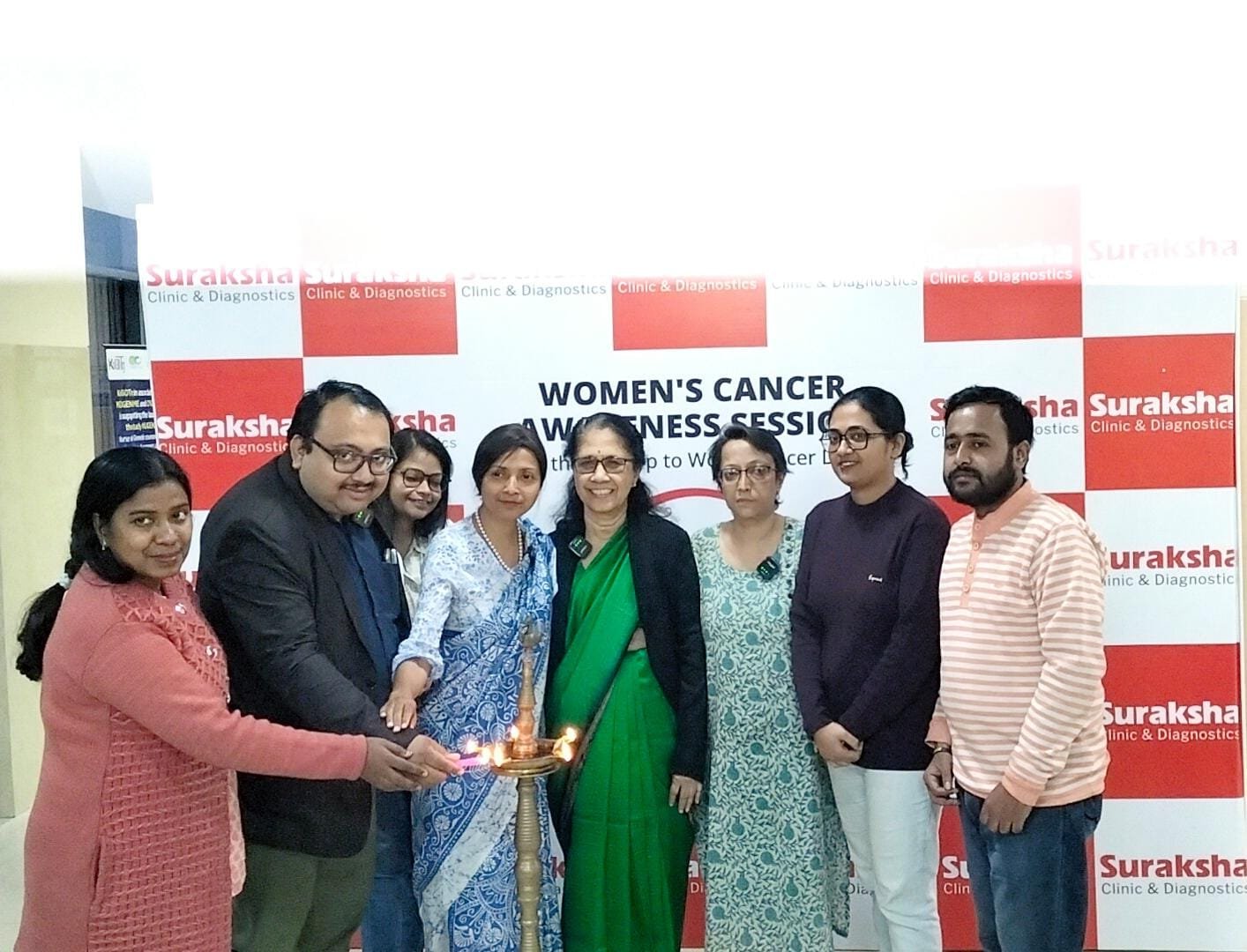
Every year, Cervical Cancer Awareness Month is observed in January. Cervical cancer is a cancer that kills approximately 70,000 women per year in India, despite being preventable through the use of HPV vaccines and screening. Nearly 1,100 women in the tea gardens of Darjeeling district, have been screened as part of PRECERCA (Prevention of Cervical Cancer), an international award winning project of KOLGOTRG (Kolkata Gynecological Oncology Trials & Translational Research Group) using the gene Xpert technology, supported by Suraksha Diagnostic Limited (“Suraksha Clinic and Diagnostics”), KOLGOTRG, Cepheild, with logistical support provided through the MOHFW, Govt of West Bengal. 10 per cent women who have been screened have tested positive for high-risk HPV (Human Papillomavirus), which causes cervical cancer in women and have received free treatment at their workplaces. This has been done to prevent the risk of developing cervical cancer, which takes around 10-15 years to commence, and the goal is to do free screening for approximately 1,00000 women.
As per PRECERCA, access to cancer screening is considered a crucial problem in rural regions and amongst women who are working, especially those who are working as hourly and daily wage earners and do not get the required time for attending screening programs. Moreover, women in remote areas in India may not have the necessary education surrounding cervical cancer and its preventive measures. Limited or less access to healthcare facilities as well as resources and socio-economic barriers make it more difficult to go through regular cervical cancer screenings and follow-up care. These women are having demanding work schedules, and the kind of work that they do, along with added responsibilities, may make it tough for them to take care of their health and do regular screenings. Stigmas and cultural beliefs surrounding reproductive health, and a discussion of sensitive topics such as cervical cancer, may prevent awareness, hindering preventive measures in remote areas.
Around 100,000 women work in the North Bengal Tea gardens alone in the foothills of the Himalayas. These garden workers work in confined settings for hourly wages, mostly belonging to tribal communities and often regarded as the sole bread earners in the family. Thus, they belong to the most vulnerable group of people who are affected by this cancer. PRECERCA has proposed a same-day screen and treat strategy among the working women of these remote tea gardens, in the Himalayan Foothills. This is done at their working place itself by utilising point of care HPV DNA testing gene Xpert technology, reducing the need for 2-3 visits at healthcare centres/or hospitals which are located far away. This initiative will help to improve acceptance and attrition rates for Cervical Care programs. This program is proposed to be continued longitudinally over the next 10 years. Simultaneous training sessions for the participants who are screened and local healthcare workers will take place along the screening and testing facility.
Cervical cancer is a serious disease, and if it is not checked promptly, due to a lack of healthcare awareness as well as facilities, many working women are dying unnecessarily at a relatively younger age (30-50 years). They are the only bread earners of the family with infants/ toddlers who are completely dependent on them. Treating one person with Cervical Cancer costs around INR 1-2 lakhs, although it is a preventable disease. One screening, which is worth of INR 2000 per woman, protects them for the upcoming 5 years. Therefore, INR 400 per year per woman can prevent a major cause of cancer mortality in women in India. The distinctive approach of PRECERCA of conducting screening camps within the tea gardens itself, along with free-of-cost HPV screening services (for first visit) and training program, is important in overcoming the obstacles to affordability and accessibility, ensuring health equality. The model is essential to prevent the spread of cervical cancer by reaching those who are vulnerable and providing them with timely interventions as well as education, making them realise the significance of regular screenings for early detection, so that they prioritise their health against all odds..
The majority of the screening programs done in India are costly and conducted within 50-100 km from the main cancer centres/ metro cities. This leaves women in the remotest parts of the country to suffer from health inequality. Conventional cross-sectional programs thus fail to accomplish the desired objective of cancer elimination. This is because the HPV virus can be acquired anytime during one’s lifetime while women remain sexually active. Most of the women will clear the virus on their own, but periodic testing at an interval of 5 to 10 years is required to pick up precancerous lesions, in instances they develop from persistence of the virus in the cervix. The other advantage of a longitudinal program is training and capacity building of a sustainable and regional workforce for prevention of cancer and public health. This program intends to train nursing staff and local health workers to form a nurse-led cancer screening program and follow up in the region, reducing the cost in the longer run, ensuring sustainability, as doctors are more likely to change their jobs, especially while working in remote regions.