Pediatric drug-resistant epilepsy remains one of the most challenging neurological conditions, particularly when it presents in very young children, where ongoing seizures can severely disrupt brain development and quality of life. Advances in neuroimaging, surgical planning, and multidisciplinary care are now transforming outcomes for these complex cases, enabling highly precise interventions that were once considered too risky.
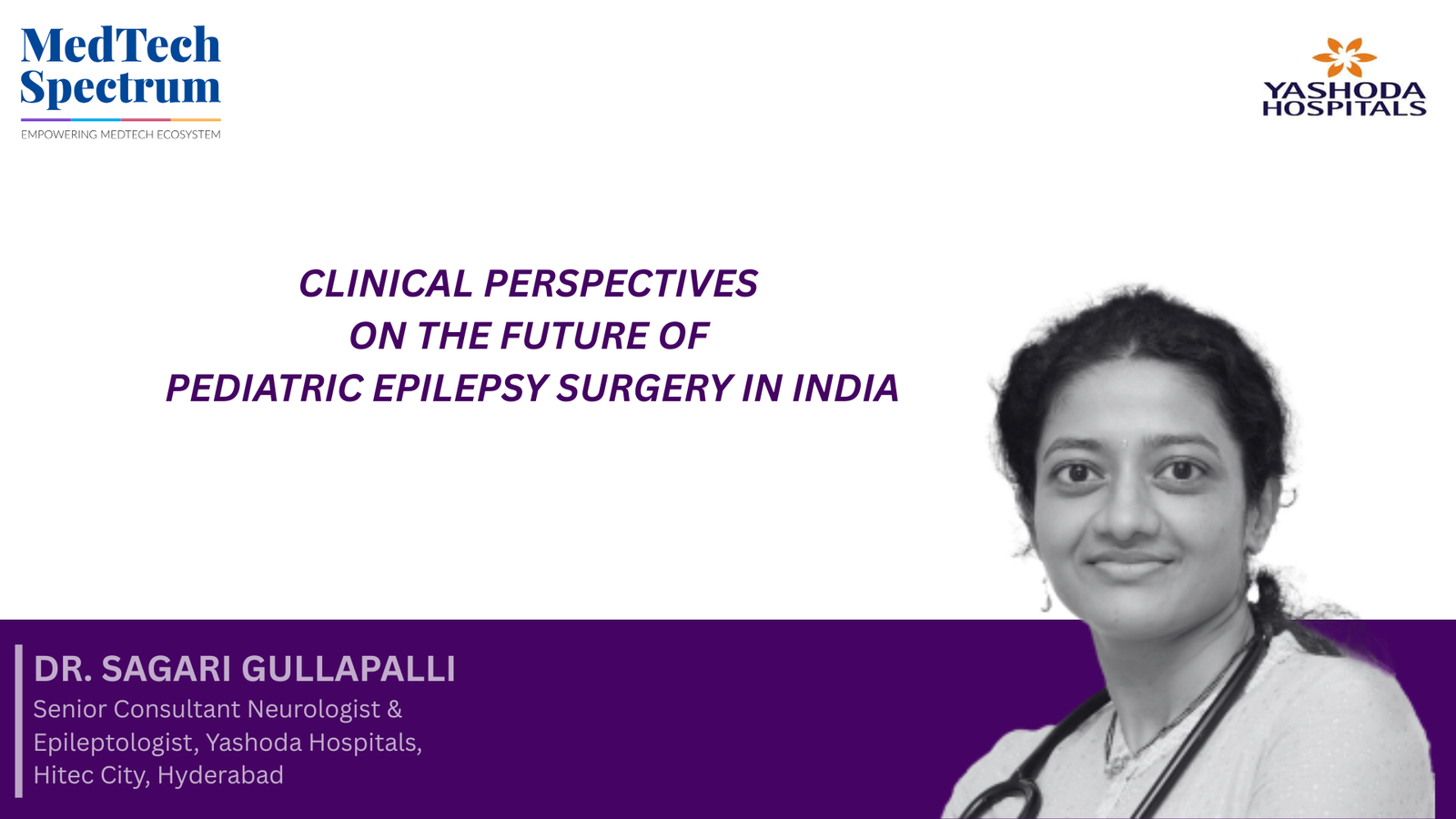
In this interview with MedTech Spectrum, Dr Sagari Gullapalli, Senior Consultant Neurologist & Epileptologist at Yashoda Hospitals, Hitec City, Hyderabad, shares insights into a rare and clinically demanding case involving left occipital lobar dysplasia in a toddler. Dr Gullapalli discusses the intricacies of diagnosing drug-resistant epilepsy in early childhood, the role of advanced imaging and intraoperative technologies in enabling posterior quadrantic disconnection, and the importance of timely surgical intervention to prevent long-term developmental delays.
She also highlights the critical role of multidisciplinary collaboration across neurology, paediatrics, neuroradiology, and neurosurgery, as well as the postoperative monitoring and rehabilitation strategies essential for sustained seizure control and neurodevelopmental improvement. Looking ahead, Dr Gullapalli offers her perspective on how pediatric epilepsy surgery is evolving in India and how tertiary care centres can expand access to these life-changing treatments.
Could you walk us through the clinical complexity of this case and what made left occipital lobar dysplasia particularly challenging in such a young patient?
This was a highly complex case because the child had drug-resistant epilepsy due to left occipital lobar dysplasia, a structural brain malformation that causes persistent seizures which do not respond to medications. In very young patients, the brain is still developing, and daily seizures can affect normal growth, cognition, and behaviour. Occipital lobar dysplasia affects a key region involved in visual processing and network connections to other parts of the brain, making localisation and surgical planning especially demanding in a toddler. Advanced imaging was essential to accurately identify the epileptogenic zone and plan an effective surgical strategy.
Posterior quadrantic disconnection is a highly specialised procedure. What technological, imaging, and intraoperative advances were critical to achieving a successful outcome in this surgery?
Posterior quadrantic disconnection (PQD) is designed to isolate the epileptogenic portion of the posterior quadrant while preserving healthy brain tissue. High-resolution MRI and functional imaging, such as PET-CT brain scans, helped delineate the extent of dysplasia before surgery. Intraoperative neuronavigation and continuous neurophysiological monitoring were key in guiding the disconnection precisely and protecting vital networks. Together, these tools allowed the surgical team to disconnect the abnormal tissue responsible for seizures while minimising neurological risk.
How important is early diagnosis and timely surgical intervention in preventing long-term developmental delays in children with drug-refractory epilepsy?
Early diagnosis and prompt intervention are critically important. Persistent frequent seizures in early childhood can interfere with cognitive development, behaviour, and learning. When seizures are drug-resistant despite adequate trials of multiple anti-epileptic drugs, surgical evaluation should be considered early. Timely surgery can reduce or eliminate seizures, supporting better developmental outcomes and improving quality of life. Studies of Posterior Quadrantic Disconnection (PQD) in pediatric populations show that seizure control after surgery can prevent further neurological deterioration.
From a multidisciplinary care perspective, how did coordination between neurology, paediatrics, and neurosurgery influence both surgical planning and postoperative recovery?
Multidisciplinary coordination was central to this outcome. It involved close collaboration between a pediatric epileptologist, pediatric neuroradiologist, and pediatric epilepsy neurosurgeon. The pediatric epileptologist identified that the epilepsy was drug-resistant and guided the diagnostic evaluation. The pediatric epilepsy neurosurgeons planned and conducted the complex disconnection, with critical support from pediatric neuroradiologists, while pediatric specialists ensured the child’s overall health and anaesthesia safety. This team approach ensured a well-coordinated surgical plan, seamless intraoperative support, and comprehensive postoperative care, which together contributed to a safe surgery and a smooth recovery.
What postoperative monitoring and long-term rehabilitation strategies are essential to ensure sustained seizure control and neurodevelopmental improvement in pediatric patients?
After surgery, close monitoring includes routine EEGs and neurological assessments to track seizure activity. Anti-epileptic medications may be adjusted gradually. Developmental follow-ups involving physiotherapy, occupational therapy, and speech therapy are often part of long-term care to support motor and cognitive progress. Regular check-ins with pediatric epileptologists help tailor ongoing care based on the child’s developmental trajectory.
Looking ahead, how do you see advanced pediatric epilepsy surgery evolving in India, and what role can tertiary care centres play in improving access to such specialised treatments?
Advanced pediatric epilepsy surgery in India is evolving with improved imaging, surgical techniques, and multidisciplinary care models. Tertiary care centres play a crucial role by providing comprehensive evaluations, access to specialised procedures such as PQD, and integrated long-term follow-up services. Increasing awareness among clinicians and families about surgical options for drug-resistant epilepsy will help improve access and outcomes for children nationwide.