The Asian Development Bank (ADB) has approved a €620 million ($700 million equivalent) loan to support the Government of Türkiye, through the Ministry of Health, in developing disaster-resilient public hospitals in earthquake-affected and high-risk provinces. The investment will expand access to quality healthcare and improve the continuity of essential health services during disasters.
The government will provide an additional €182 million ($204 million equivalent) in counterpart financing. By 2033, project-supported hospitals are expected to serve nearly 300,000 inpatients annually.
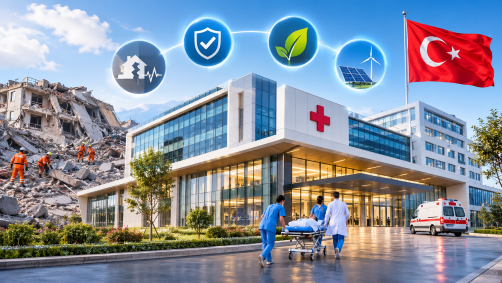
The Health Infrastructure Enhancement and Lifesaving Medical Advancements Sector Project will support the construction of nine secondary and tertiary hospitals, including two research and training hospitals, and a specialized mental health facility. Hospitals will incorporate earthquake-resistant designs, backup power and water systems, and emergency communication systems to maintain essential services during and after disasters.
“Hospitals are crucial when disasters strike, and ensuring they can continue providing essential care during and after emergencies can save lives,” said ADB Country Director for Türkiye Keiju Mitsuhashi. “This project will help the Government of Türkiye boost disaster preparedness and resilience among health institutions while expanding quality health services, particularly for communities in areas facing high disaster risks.”
To improve hospital efficiency and sustainability, the project will integrate renewable energy and energy-efficient features, including passive cooling and ventilation as well as high-performance building envelopes. Private triage areas, breastfeeding rooms, and caregiver support services will also be provided to improve care and protection for women, children, older people, and people with disabilities.
The hospitals will be designed to achieve LEED Gold or equivalent national green building certification, incorporating energy-efficient systems and renewable energy solutions. Healthcare quality and patient safety will be strengthened through compliance with national standards and accreditation processes administered by the Türkiye Health Care Quality and Accreditation Institute (TÜSKA).
Türkiye’s health care system faces recurrent risks from earthquakes and disasters caused by natural hazards. The 2023 earthquakes alone severely damaged 136 hospitals and about 15 per cent of primary health care facilities, disrupting emergency care and essential services. Demand for specialized care is also growing, particularly for mental health, with nearly 17 per cent of the country’s population experiencing mental health conditions, highlighting the importance of expanding access to quality health services alongside investments in infrastructure.