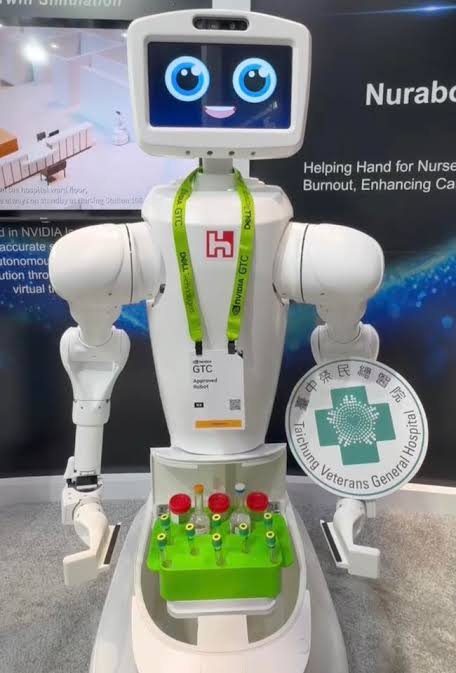
Healthcare Triangle (HCTI), a healthcare information technology company, announced that it has entered into a Memorandum of Understanding (MOU) with AI World Sdn. Bhd. (AI World), a Malaysian company specializing in information technology, artificial intelligence and humanoid robotics, to establish a joint venture to bring AI-enabled humanoid nursing robots to hospitals and clinical settings across North America.
Under the MOU, the parties intend to form a new joint venture company that would hold the intellectual property and distribution rights for the robots in North America. HCTI is expected to hold a 70 per cent ownership interest in the joint venture and AI World 30 per cent.
HCTI will aim to use its established network of over 140 hospital relationships it has built over the years to bring these robots to market after obtaining the required approvals and applicable regulatory clearances.
According to the World Health Organization (WHO) there is an estimated global shortage of 4.5 million Nurses by 2030 and healthcare facilities are adopting automation to reduce heavy physical workloads and administrative burnout.
The robots are designed to function as AI nursing assistants, supporting patient toileting and the related cleaning and hygiene care. These are among the most physically demanding and time-consuming tasks in inpatient care, and among the most sensitive for patients. By performing this work under the supervision of clinical staff, the technology aims to give nurses more time for direct patient care, reduce the risk of caregiver injury, and support consistent, dignified hygiene care.
In North America, the region HCTI and AI World are targeting, Grand View Research estimates that robotic nurse assistants accounted for roughly 39 per cent of a global market of approximately $1.5 billion in 2025, or about $585 million. The global market is projected to grow to approximately $4.4 billion by 2033, a compound annual growth rate of 14.7 per cent. Demand is underpinned by a persistent U.S. nursing workforce gap: the Health Resources and Services Administration projects an 8 per cent shortage of registered nurses in 2028.