Longevity medicine is gaining attention as healthcare systems look beyond disease treatment towards prevention, earlier intervention and longer healthspan.
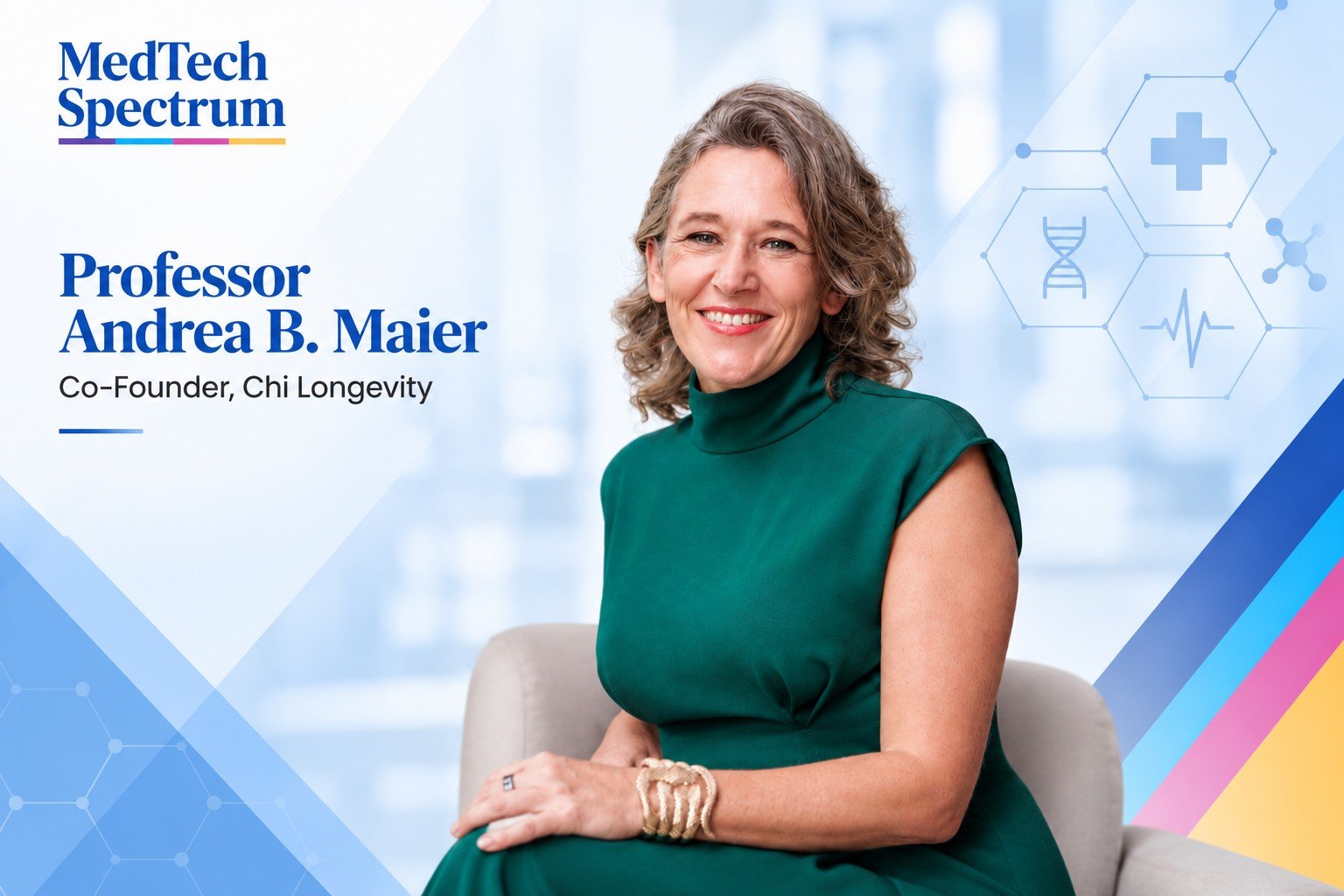
At Chi Longevity, Professor Andrea B. Maier is building a model around what she describes as precision geromedicine: combining biological age assessments, metabolic health, genetics, inflammation, microbiome data, physical performance and other measures to understand how an individual is ageing and where intervention may make a measurable difference.
Professor Andrea B. Maier, Co-Founder of Chi Longevity, discusses how the clinic determines which biomarkers matter, how it distinguishes evidence-based interventions from experimental approaches, and why longevity medicine will need to demonstrate meaningful improvements in cognition, physical function and independence if it is to gain broader acceptance.
Chi Longevity was founded around the idea of moving healthcare from reactive treatment towards proactive, evidence-based longevity medicine. What gaps in conventional healthcare were you trying to address when you co-founded the clinic?
At Chi Longevity, our ambition is to age better through science. Conventional medicine is very good at treating disease, but it largely waits until symptoms emerge or diagnostic thresholds are crossed. Ageing does not work like that - it is a continuous process leading to impaired metabolism, muscle, cognition, cardiovascular function and begins decades before disease becomes apparent.
I built Chi Longevity to act earlier. Through The Maier Method, we precisely map an individual’s biology and function to understand not simply how old someone is, but how they are ageing and where intervention can make a difference.
And we do not stop at testing. We translate the findings into targeted action and measure again to determine whether it worked.
This is what we mean by age better through science: measure, understand, intervene and remeasure to optimize health and feeling better.
The Maier Method brings together biological age assessments, genetics, metabolic health, inflammation, microbiome data and other measures. How do you determine which biomarkers are clinically meaningful, and how do you avoid overwhelming patients with data that may not yet translate into actionable care?
The Maier Method is not about generating more data. It is about generating the data that matter. We can measure thousands of variables. That does not mean thousands of variables determine clinical care.
At Chi Longevity, we ask whether a measurement tells us something meaningful about health or function, whether it identifies something potentially modifiable, and whether it can help us monitor the response to an intervention.
We then integrate those measurements. A biological age result, microbiome profile or inflammatory marker has limited value when interpreted in isolation.
For the client, we make the distinction very clear: what should we act on now, what should we monitor, and what is not yet actionable?
Complex biology has to result in clear decisions. Otherwise, it is simply more data.
One of the biggest questions around longevity medicine is evidence. How does Chi Longevity decide which interventions are sufficiently validated to use in clinical practice, particularly when many longevity therapies remain experimental or have limited long-term human data?
The longevity field is full of interventions with interesting mechanisms, animal data or early human studies. That does not automatically make them appropriate clinical treatments, particularly for relatively healthy people.
At Chi Longevity, evidence drives decisions. We examine the quality of the human data, magnitude and consistency of effect, safety, and whether the outcome is clinically meaningful. Then we determine whether that evidence applies to the individual.
Our approach to supplementation captures this particularly well: Data first. Supplement second.
We measure whether there is a need, intervene specifically and then measure the response rather than prescribing the same supplement to everyone.
If something is scientifically promising but insufficiently validated, its appropriate place may be a clinical trial rather than a clinic. That scientific discipline is fundamental to Chi Longevity.
Chi Longevity uses a multidisciplinary model involving physicians, nutrition specialists, psychologists, health coaches and physical and cognitive training. Why is this integrated approach important, and what have you learned about turning biological insights into sustained behavioural or health improvements?
Ageing is multisystem, that is why Chi Longevity treats the person as an interconnected biological system, not as a collection of individual test results.
Muscle influences metabolism and brain health. Sleep influences cognition and metabolic health. Cardiovascular function influences almost every organ. These systems cannot be interpreted independently.
Our multidisciplinary team therefore works from one integrated Maier Method strategy, rather than giving clients separate recommendations from separate specialists.
And the goal is not simply to tell somebody to eat better, exercise more or sleep longer. We want to understand where their body is losing function or resilience and what intervention is most likely to change that trajectory.
Then we measure again.
That creates something very different from generic lifestyle advice: a personalised precision path to vitality and optimal performance based on the individual’s own biology and function.
Precision geromedicine is still a relatively new field. What outcomes does Chi Longevity track to determine whether its programmes are genuinely improving healthspan, and what type of clinical evidence will be needed for longevity medicine to gain wider acceptance among healthcare systems and regulators?
The outcome is not a younger number on a biological-age test. The outcome is a healthier, better-functioning person. That distinction is essential.
At Chi Longevity, we track biological ageing together with organ health, physical performance and behaviour.
Our Pinnacle programme includes repeat precision testing after six months specifically so that we can rigorously measure progress and refine the intervention strategy rather than assuming that it worked.
For precision geromedicine as a field, however, the evidence bar must go further.
We need longitudinal studies showing which gerodiagnostics predict future disease and functional decline, and randomised controlled trials demonstrating that interventions improve meaningful outcomes.
Healthcare systems will not ultimately adopt healthy longevity medicine because somebody's biological age changed by three years.
They will adopt it if we can demonstrate preserved cognition, physical function and independence, lower disease burden and acceptable safety.
That is what “Live Healthier for Longer” has to mean scientifically. Not a slogan, but a measurable clinical outcome.
Chi Longevity has expanded beyond the traditional clinic setting, including its SPARKD programme at Four Seasons Hotel Singapore. How do you see longevity medicine evolving beyond specialist clinics, and what role could models like this play in making preventive and precision healthcare more accessible across Asia?
People do not age in clinics. Healthy longevity therefore cannot stop at the clinic door.
The clinic remains essential for deep assessment, medical interpretation and clinical decision-making. But interventions have to translate into the thousands of hours people spend living their lives.
That is why SPARKD by Chi Longevity is important.
We assess physical and cognitive performance together, establish a baseline, and translate that information into personalised training that combines movement with cognitive challenge.
It takes the principles of The Maier Method from assessment into action.
This points towards a much larger model for Asia.
Chi Longevity can connect precision geromedicine with healthcare providers, insurers, employers, fitness and hospitality while maintaining the same scientific and clinical standards.
And it cannot simply be a Western model transplanted into Asia. Populations, healthcare systems, cultures and disease patterns differ. Precision geromedicine must reflect those differences.
Our ambition is bigger than building healthy longevity clinics. It is to make healthy longevity medicine scalable.
Ultimately, Live More. Do More. Be More. should not describe an exclusive service. It should describe what evidence-based healthy longevity medicine enables people to do throughout life.