Singapore’s private specialist care landscape remains fragmented, with patients often moving between general practitioners, specialists, hospitals, diagnostics providers, medical facilities and insurers that do not always connect efficiently.
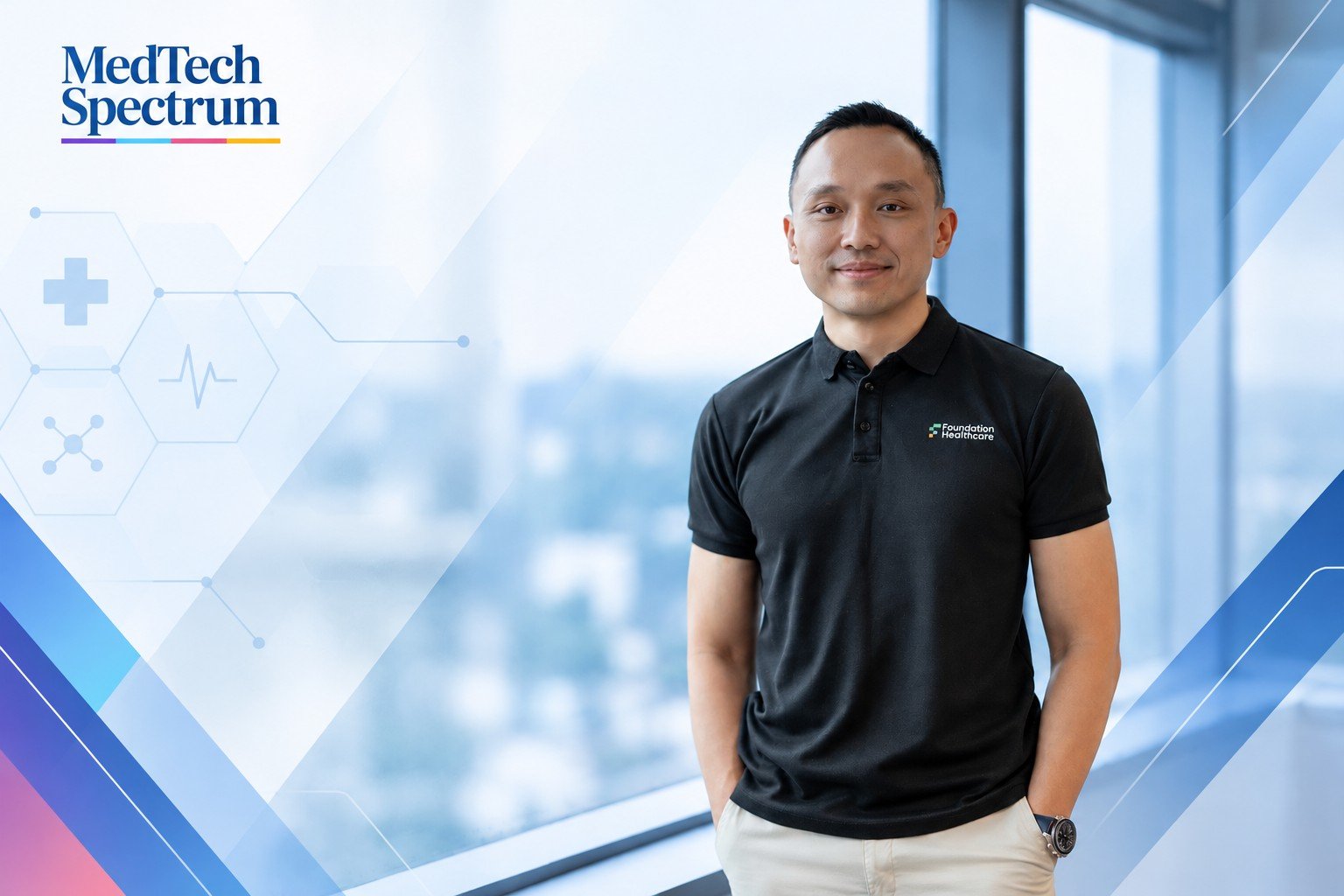
Foundation Healthcare Holdings is building its model around an integrated network of specialists, ambulatory centres and its AVA® digital platform. Liaw Yit Ming, Chief Executive Officer of Foundation Healthcare Holdings, discusses how the group is addressing fragmentation in specialist care, expanding ambulatory services and using technology to connect different parts of the patient journey across Singapore and the wider region.
Foundation Healthcare brings together more than 100 specialists across 16 specialties and over 70 clinics and medical centres. What gaps in Singapore’s specialist care landscape does the network address, and how so?
One of the biggest gaps in Singapore’s private specialist care market is fragmentation. Many specialists operate independently, and that is on top of the journey that patients navigate as they move between general practitioners, specialists, hospitals, diagnostics, medical facilities and insurers that do not always connect efficiently.
At Foundation Healthcare, our approach is to bring specialists together on a common platform rather than have each practice operate in isolation. As the network grows, we are able to create more opportunities for multidisciplinary and inter-specialty referrals, provide shared operational infrastructure, and build deeper relationships with GPs and payor partners.
There are more than 2,400 private specialists in Singapore, yet even as the country’s largest multi-specialty platform today, Foundation Healthcare accounts for less than 5% of that market, which means there is still significant headroom for us to grow.
The specialist network is also only one part of our platform. It is complemented by our medical centres, which allow selected procedures to be delivered safely in lower-cost outpatient settings, and AVA®, which connects the entire healthcare ecosystem of patients, specialists, facilities and payors together.
The objective is to make specialist care easier to access and navigate, while improving coordination and ultimately delivering high-quality care at a lower overall cost.
As care moves beyond hospitals, what role can private specialist clinics play in improving access, shortening patient journeys and providing more coordinated care across Singapore?
As Singapore’s healthcare needs continue to grow, private specialist clinics can play an increasingly important role in ensuring patients receive the right care in the right setting.
Hospitals will always have a critical role in acute, complex and inpatient care. However, many consultations, diagnostics, follow-up care, and even certain procedures no longer need to necessarily take place in a hospital setting. In fact, with advances both in medicine and technology, more procedures can now be delivered safely outside a traditional hospital environment.
Our recently upgraded Foundation Ambulatory Centre Orchard, or FAC Orchard, is one example of how that works in practice. Following its refurbishment, the centre now provides dedicated operating theatres, endoscopy and recovery facilities for selected surgical and endoscopic procedures.
Patients can receive the treatment they need in an ambulatory setting and return home on the same day. Dedicated capacity also gives specialists more timely access to operating slots, while preserving hospital resources for patients who require more complex or inpatient care.
However, the bigger opportunity that our platform enables is for specialist clinics to become more connected to the rest of the patient journey.
A specialist should not operate as an isolated point of care. By connecting specialist practices more closely with GPs, other specialists, payors and the appropriate medical facilities, patients can seamlessly move from diagnosis and consultation to treatment and follow-up with fewer disconnected hand-offs.
For us, the principle is straightforward: patients should receive the right level of quality care in the right setting and at a reasonable cost. This can improve access and coordination while making better use of Singapore’s healthcare resources.
How is Foundation Healthcare using its AVA® digital platform to connect specialists, patients and other parts of the healthcare ecosystem, and where do you see technology making the biggest difference to the patient journey?
AVA® is the technology layer that connects the different healthcare ecosystem participants on our platform.
It is designed to reduce the administrative friction that occurs when patients, specialists, facilities and payors are working through separate systems and processes.
We have already seen this work successfully in Singapore where AVA® is already being used by one of our insurer partners for pre-authorisation across both private and public hospitals in the country.
AVA®’s capabilities cover different parts of the patient journey, including specialist discovery and appointment booking, referrals, pre-authorisation, admissions and discharge, and claims workflows.
For instance, our hospital admissions module is now live with a regional private hospital operator, digitising the admissions process to reduce patient waiting times and free up administrative capacity.
The biggest difference AVA® is making currently from a patient’s perspective is removing the friction and complexity patients experience in their healthcare journey: repeated paperwork, delays in insurance approval, unnecessary manual processes and navigating disconnected providers and systems.
Technology should make healthcare simpler and more accessible for the patient.
Moving forward, our immediate focus will be on deepening AVA®’s integration and adoption across the healthcare ecosystem in Singapore and the region, enabling greater operational efficiency for both ourselves and our partners.
After previously working with hospital strategy, investments as well as insurtech, how have those experiences shaped Foundation Healthcare’s approach to integrating clinical care, technology and partnerships?
I have had the opportunity to look at healthcare from several different perspectives.
At IHH Healthcare, I worked on strategy and growth, including M&A and greenfield projects. Before that, I was in investments at Khazanah Nasional and later co-founded Smarter Health as an insurtech business.
The way we have built Foundation Healthcare reflects those different experiences.
We look at the healthcare system as a whole rather than starting with any single asset or service. Specialists sit at the core of the platform, but they need the right clinical infrastructure around them, strong relationships with primary care and payor partners, and technology that makes the different parts of the system work together more efficiently.
It also means being intentional about how we grow.
Our medical centre investments follow underlying demand from the specialist network rather than building capacity first and hoping demand follows. Similarly, with AVA®, we start with actual workflow and coordination problems and use technology to solve them, rather than treating technology as a standalone product.
Those experiences taught me that healthcare problems are rarely solved by looking at one part of the system in isolation.
You need to understand where the demand is, where the friction sits, and where investment can genuinely improve the patient journey. That is the discipline we have tried to bring to Foundation Healthcare from the beginning.
Looking ahead, how do you see specialist outpatient care evolving across Singapore and the wider APAC region, and what will healthcare groups need to do differently to remain accessible, efficient and patient-centred?
We expect specialist outpatient and ambulatory care to play a larger role as healthcare demand continues to grow.
Ageing populations and rising chronic disease prevalence are increasing demand for specialist care, while medical inflation is putting greater pressure on patients and payors. At the same time, advances in clinical techniques are allowing more procedures to be performed safely outside hospitals.
Day surgery and ambulatory care remain relatively underpenetrated in Singapore and Asia compared with more developed healthcare markets, so we see significant room for this part of the system to grow.
But the answer is not just to move as much care out of hospitals as possible. It is to right-site care appropriately, with hospitals continuing to focus on acute and complex cases while other cases are delivered in more efficient outpatient environments.
Healthcare groups will also need to become better connected.
Scale is useful but does not solve fragmentation on its own. You need specialist breadth, appropriate medical centre capacity, close relationships with payors and primary care partners, and technology that connects those participants across the patient journey.
When these pieces work together, patients can access the right specialist care quickly and move more seamlessly from diagnosis through treatment and follow-up.
For us, growth remains a priority, both in Singapore and over time in target markets that we have identified for ourselves such as Malaysia and Hong Kong.
But the measure of that growth should be whether we can improve access to quality specialist care, patient experience and outcomes, and deliver care in a way that is sustainable for patients, providers and the broader healthcare system, rather than simply the size of our footprint.
With advances in healthcare technology, the shift towards home-based care and an ageing population, how is Foundation Healthcare adapting its specialist care model to meet changing patient needs in Singapore and APAC?
As populations age, patients are increasingly likely to require care across multiple specialties and over a longer period, rather than for a single episode of treatment.
For us, that makes coordination across the patient journey increasingly vital.
This has prompted us to look at how we can broaden the services around our specialist network in ways that genuinely improve that journey.
Areas such as rehabilitation and physiotherapy, for example, are natural extensions for some of our musculoskeletal specialties and can support patients beyond the initial consultation or procedure.
As more care moves into community and home settings, we also see technology playing a larger role in reducing the administrative burden around care and helping connect different parts of the healthcare ecosystem to work together more efficiently.
The valuable lessons that we have learned from our home market in Singapore will inform our expansion into priority markets such as Hong Kong and Malaysia, where we see more similarities rather than differences in market fundamentals.
They face many of the same pressures around rising healthcare costs, growing demand and fragmented specialist care.
That gives us confidence that the model we have built in Singapore can scale, while still being adapted to the needs of patients and the healthcare environment in each market.